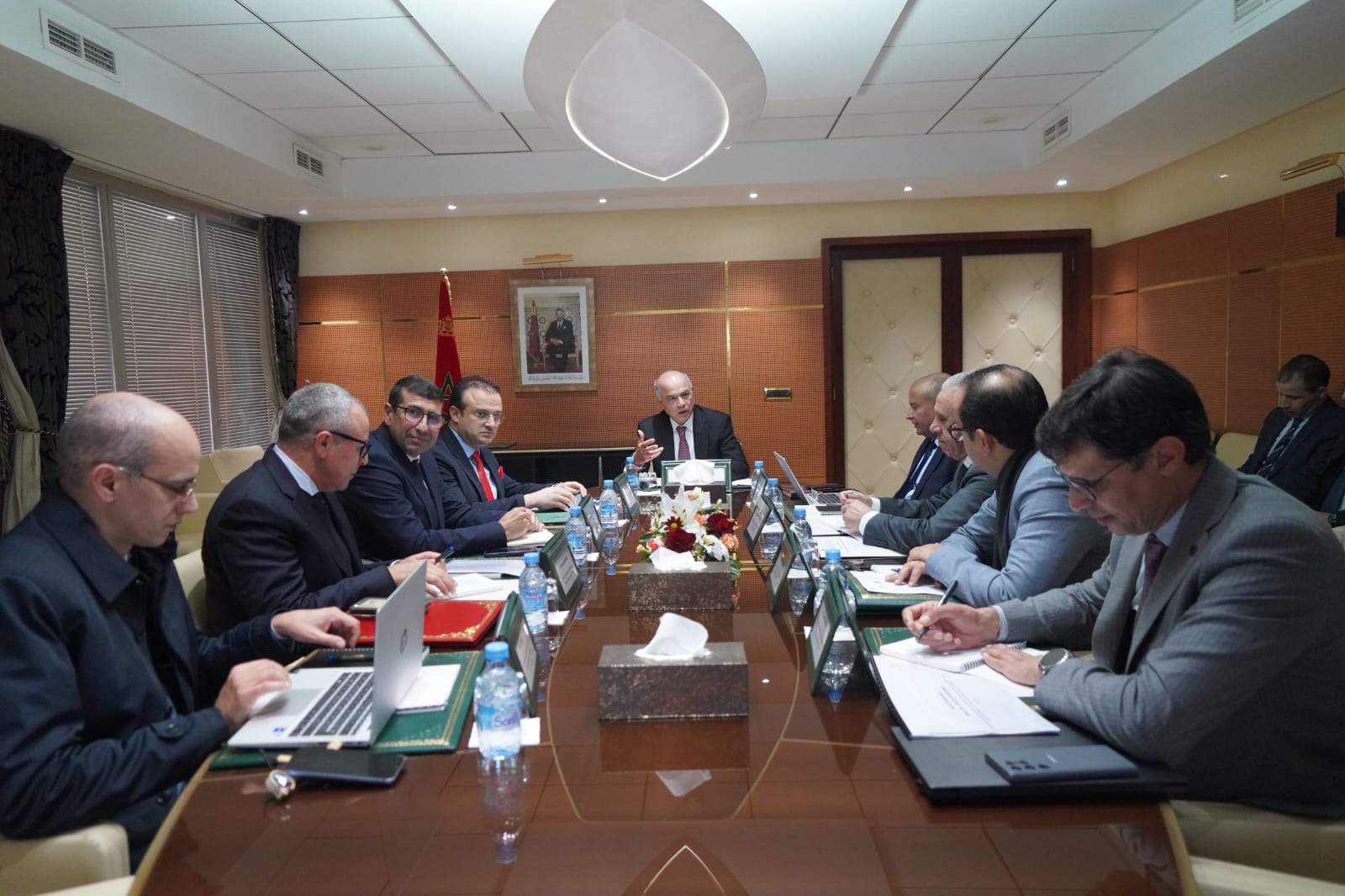
In a strategic move designed to fortify Morocco’s long-term sovereign resilience, the High Commission for Planning (HCP) has formally convened a high-level steering committee to oversee a landmark prospective study focused on the Water-Energy-Food (WEF) Nexus through the horizon of 2040. This initiative, launched in Rabat on February 11, 2026, represents a fundamental shift in the Kingdom’s approach to public policy, moving away from fragmented sectoral management toward a sophisticated, integrated governance model. By synthesizing the critical interdependencies between these three vital resources, the Moroccan government seeks to navigate the increasingly volatile intersection of climate change, demographic pressure, and global economic fluctuations.
The conceptual framework of this study is rooted in the "Nexus" approach, which recognizes that decisions in one sector inevitably produce ripple effects across others. For instance, the energy intensity of large-scale desalination projects directly impacts fiscal planning and water availability, while agricultural expansion dictates both hydraulic demand and national energy consumption. To address these complexities, the HCP has orchestrated an unprecedented institutional alliance, bringing together the Ministries of the Interior, Economy and Finance, Equipment and Water, Agriculture, and Energy Transition, alongside the critical participation of Bank Al-Maghrib. This collaborative architecture ensures that the resulting strategies are not merely theoretical but are grounded in the realities of macroeconomic stability and fiscal prudence.
Central to this endeavor is the alignment with the High Orientations of His Majesty King Mohammed VI and the principles outlined in the New Development Model (NMD). The transition toward a "Strategic State" necessitates the dissolution of traditional administrative silos in favor of systemic synergy. By employing rigorous quantitative and qualitative modeling, the HCP aims to construct various scenarios that will allow policymakers to anticipate future shocks and optimize resource allocation. This data-driven foresight is intended to provide a clear roadmap for long-term public arbitration, ensuring that every infrastructure investment or policy reform is weighed against its broader socio-economic and territorial impact.
Beyond the technical sophistication of the modeling, the study’s ultimate objective is the preservation of social equilibrium and the enhancement of national well-being. Investors and citizens alike are increasingly sensitive to the risks posed by resource scarcity and price volatility. By securing the supply chains for water, energy, and food at sustainable price points, the Moroccan state is effectively building a protective buffer against external inflationary pressures and environmental degradation. This proactive stance is designed to bolster investor confidence by providing a predictable and resilient economic environment, while simultaneously ensuring equitable access to vital resources for all Moroccan households.
In conclusion, the HCP’s 2040 prospective study serves as a sophisticated instrument of economic diplomacy and national security. It reflects an advanced understanding of the modern challenges facing emerging markets, where resource management is no longer a localized technical issue but a central pillar of sovereign strategy. Through this initiative, Morocco is positioning itself as a regional leader in integrated sustainable development, leveraging deep analytical insights to transform potential vulnerabilities into a foundation for durable and inclusive growth.