The intersection of judicial intervention and executive trade policy created a volatile backdrop for global markets this week as President Donald Trump pivoted toward a new protectionist framework. Following a landmark Supreme Court ruling that struck down several of the administration’s most expansive previous tariffs, the White House responded immediately by instituting a fresh 10% global levy on the majority of imports. This unilateral move signals a determined effort by the executive branch to maintain its "America First" trade posture despite significant legal setbacks. The announcement of the blanket tariff, coupled with a series of underwhelming economic indicators, fueled a sharp rally in precious metals, with gold and silver witnessing substantial price appreciation as investors sought refuge from the dual pressures of policy uncertainty and slowing domestic growth.
Despite the friction introduced by the new trade levies, equity markets displayed remarkable resilience. The S&P 500 managed to snap a persistent two-week losing streak, ending the session higher as participants processed the implications of the Supreme Court’s decision alongside a flurry of diplomatic and industrial activity. While the broader macroeconomic data suggested a cooling economy, the removal of the more draconian previous tariff structures provided a temporary sense of relief for certain sectors, even as the new 10% across-the-board tax was introduced. However, the optimism in equities remained tempered by escalating geopolitical risks. Analysts at Raymond James issued a sobering assessment regarding Middle Eastern stability, suggesting that a U.S. military operation in Iran has become increasingly probable at this juncture, a forecast that adds a significant risk premium to global energy markets and defense-related securities.
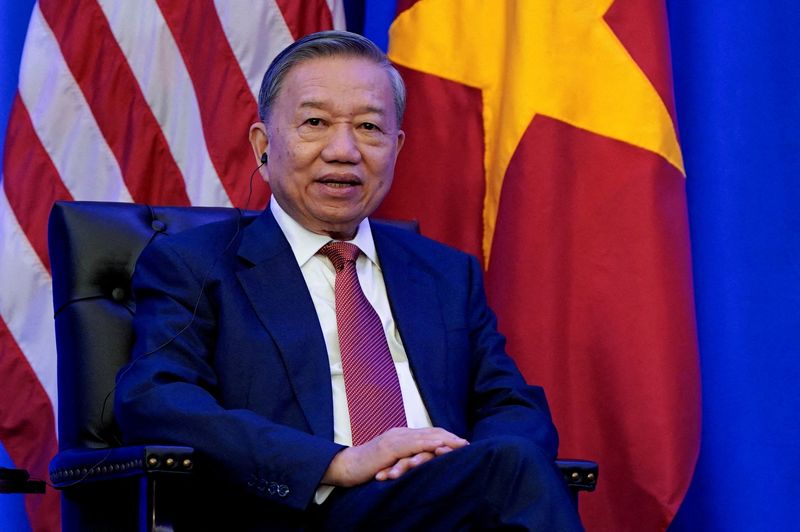
Amidst this landscape of legal challenges and heightened regional tensions, the White House shifted its focus toward strategic bilateralism during a high-stakes summit with Vietnamese leadership. President Trump held his first formal in-person meeting with To Lam, the head of Vietnam’s ruling Communist Party, following the conclusion of the inaugural Board of Peace meeting in Washington. This diplomatic engagement yielded substantial economic results, most notably the finalization of aerospace agreements valued at more than $30 billion. Under the terms of these deals, Vietnamese carriers are set to acquire 90 aircraft from Boeing, a move that provides a significant bolster to the American manufacturing sector and underscores Hanoi’s growing importance as a critical trade partner in Southeast Asia.
Beyond the immediate industrial windfall, the dialogue between Washington and Hanoi signaled a potential paradigm shift in technological cooperation. President Trump indicated a willingness to reevaluate Vietnam’s current standing on restrictive lists that limit access to advanced U.S. technology. By working to remove these barriers, the administration appears to be leveraging trade concessions and high-value procurement deals to cement a more robust strategic alignment. This multifaceted approach—combining aggressive global tariffs with targeted diplomatic incentives—illustrates the administration’s broader strategy of navigating a complex global economy while simultaneously managing domestic judicial constraints and intensifying geopolitical friction. For institutional investors, the confluence of these events necessitates a sophisticated balancing act between the resurgence of safe-haven assets and the evolving landscape of international trade relations.