The United States Supreme Court delivered a decisive blow to the Trump administration’s economic cornerstone on Friday, fundamentally recalibrating the balance of power between the executive branch and the judiciary. By striking down the administration’s sweeping tariff regime, the justices effectively signaled the termination of a year-long period in which the President operated with a degree of unilateral authority that many observers characterized as monarchical. The 6-3 decision, authored by Chief Justice John Roberts, focused on the limits of the International Emergency Economic Powers Act, asserting that the executive cannot invoke broad economic security concerns to bypass the constitutional prerogative of Congress over taxation and trade. This ruling represents more than a mere legal setback; it is a profound institutional rebuke that punctures the President’s expansive vision of emergency powers, which had previously served as the primary engine for his protectionist agenda.
Market participants reacted with a nuanced blend of relief and caution. Despite the inherent uncertainty introduced by the ruling, major equity indices ended the session higher, with the S&P 500 snapping a two-week losing streak as investors weighed the prospect of a more constrained regulatory environment. However, the optimism was tempered by disappointing economic data, which, alongside the judicial intervention, triggered a flight to safety. Gold and silver prices surged as the ruling injected fresh volatility into a landscape already strained by geopolitical tensions. This sense of instability was further compounded by a stark assessment from Raymond James, which suggested that a U.S. military operation in Iran appears increasingly likely at this stage, creating a dual-front crisis of constitutional and international proportions.
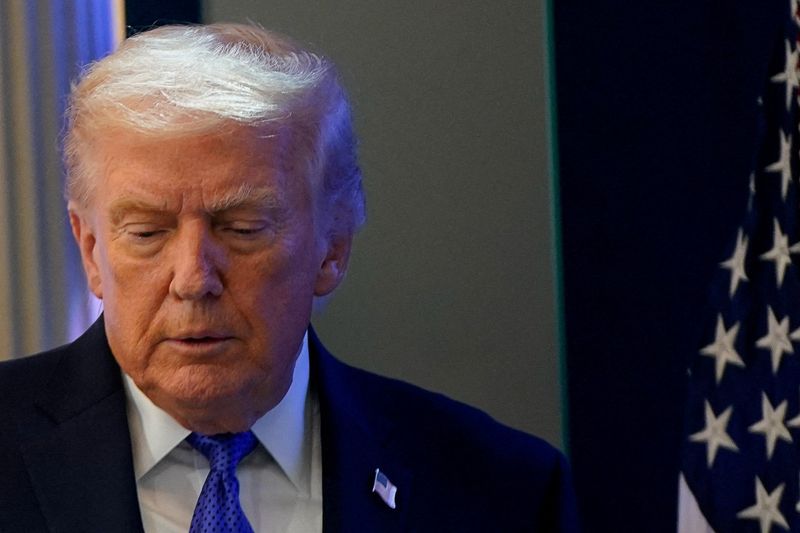
In the immediate aftermath of the ruling, the President’s response was both visceral and strategically defiant. During a meeting with governors at the White House, Delaware Governor Matt Meyer observed a president "seething" over the judicial constraint. Publicly, the President pivoted to a new 10% global levy, a move intended to signal that his trade agenda remains active despite the court’s interference. In a characteristically combative press briefing, he disparaged the justices—including his own appointees—labeling them a "disgrace" while simultaneously claiming that the ruling actually clarified his authority to impose even steeper penalties, provided a more rigorous administrative process is followed.
Yet, legal scholars and historians suggest the presidency has emerged from this confrontation demonstrably weakened. While the President remains defiant, asserting that he does not require Congressional approval for his next steps, the reality of the post-ruling landscape is far more cumbersome. Alternative statutory pathways for imposing tariffs are notably slower, requiring exhaustive justifications and being subject to strict time limitations that the International Emergency Economic Powers Act previously allowed him to circumvent. As the nation approaches pivotal midterm elections, this judicial check on executive "whim" creates a significant hurdle for an administration that has long utilized the threat of tariffs as a primary tool of diplomacy and domestic industrial policy. The result is a presidency that, while still potent, must now navigate a much narrower corridor of authority.