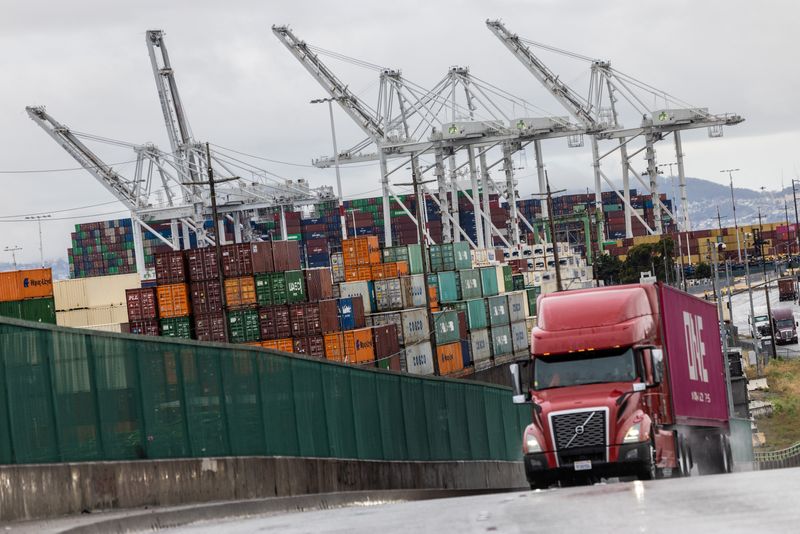
The United States Supreme Court delivered a consequential blow to the administration’s trade agenda on Friday, ruling 6-3 that President Donald Trump overstepped his executive authority by utilizing the International Emergency Economic Powers Act (IEEPA) to bypass Congress and impose sweeping tariffs. This landmark decision not only marks a significant constitutional check on presidential power but also triggers a massive fiscal liability for the federal government. According to a specialized analysis conducted by the Penn-Wharton Budget Model (PWBM) at the request of Reuters, the ruling exposes the U.S. Treasury to potential refund claims exceeding $175 billion—a figure that surpasses the combined 2025 discretionary spending of the Departments of Transportation and Justice.
The fiscal magnitude of this legal reversal is rooted in the aggressive pace of recent collections. Lysle Boller, a senior economist at PWBM, noted that the administration had been generating approximately $500 million in daily revenue through IEEPA-based duties since their inception in early 2025. To reach these estimates, researchers employed a granular forecasting model that cross-references U.S. Census Bureau data across 11,000 distinct product categories and 233 countries. The model accounts for the inherent volatility of recent trade policy, including the punitive 40% tariff imposed on Brazil following the prosecution of Jair Bolsonaro, as well as the tactical reduction of South Korean duties from 25% to 15%. While the Customs and Border Protection agency last reported a lower figure of $133.5 billion in at-risk duties, PWBM economists suggest that the door is now wide open for a corporate scramble to reclaim these funds via the Court of International Trade.
Despite the stinging judicial rebuke, the executive branch moved with characteristic speed to preserve its protectionist framework. President Trump immediately announced a temporary 10% global import levy, slated to last 150 days, while the administration initiates more traditional trade investigations to maintain leverage over global partners. Treasury Secretary Scott Bessent has sought to project a sense of fiscal stability amid the turmoil, asserting that the Treasury’s robust cash balances—projected to reach $900 billion by June—are more than sufficient to cover the anticipated wave of refund requests. Bessent maintains that the new measures will ensure that tariff-related revenue streams remain virtually unchanged through the 2026 fiscal year.
Financial markets responded to this complex intersection of law and policy with a mixture of relief and cautious hedging. While the S&P 500 managed to snap a two-week losing streak as investors processed the clarity provided by the Supreme Court, the broader economic outlook remained clouded by disappointing data. Safe-haven assets like gold and silver experienced significant rallies, bolstered by a sobering geopolitical assessment from Raymond James, which suggested that a U.S. military operation in Iran appears increasingly likely at this stage. As the administration pivots from emergency statutes to more established trade laws, the long-term impact on global supply chains and domestic inflation remains a central concern for the investor class, who must now navigate a landscape defined by both judicial intervention and persistent executive volatility.