The landscape of American monetary policy faces a definitive turning point following President Trump’s nomination of Kevin Warsh as the next Chairman of the Federal Reserve. This selection arrives at a critical juncture for global markets, as investors weigh the implications of a potentially more hawkish or policy-aligned central bank against a backdrop of complex inflationary pressures. Initial market reactions have been characterized by a notable retreat in equities as the prevailing trade in precious metals begins to unwind, even as Wall Street maintains its broader upward trajectory for the month of January. This leadership transition signals a potential recalibration of the Federal Reserve’s approach, particularly as fiscal policy becomes more assertive under the current administration’s agenda.
Against this backdrop of institutional change, Morgan Stanley has released a comprehensive macro outlook identifying the structural forces expected to redefine the global economy through 2026. The firm’s strategists posit that navigating the coming volatility requires a sophisticated thematic lens, centering on four primary pillars: the diffusion of artificial intelligence, the evolving future of energy, the emergence of a multipolar geopolitical order, and broad societal shifts. This latter theme represents a significant expansion of previous research into longevity, now encompassing a wider spectrum of demographic and consumer transformations. Stephen Byrd, a lead strategist at the firm, suggests that these ripple effects—ranging from AI-driven labor disruption to the drive for healthy aging—will create profound consequences for governments and corporate entities alike.
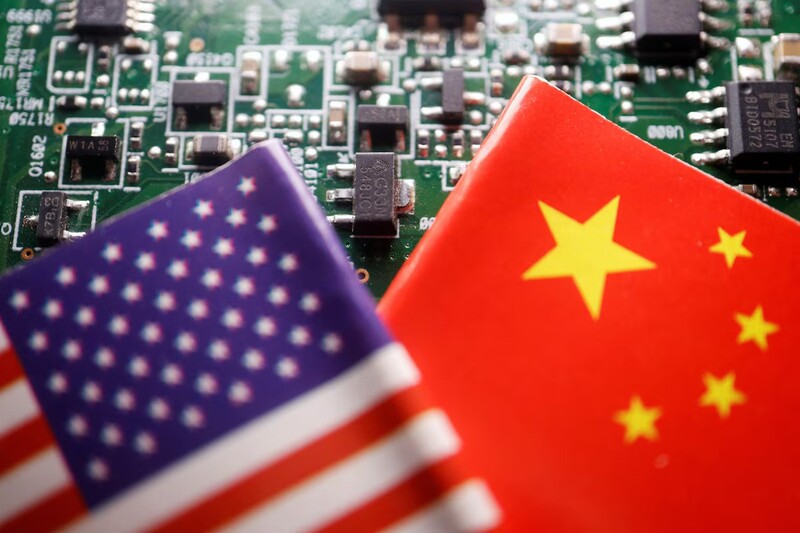
Technological advancement remains the primary engine of this transition, with Morgan Stanley predicting a bifurcated reality for large language models. While U.S. frontier models are expected to achieve significant breakthroughs in capability by the first half of 2026, Chinese competitors are projected to lag, creating a temporary gap in what analysts term "gross domestic intelligence." This disparity is anticipated to catalyze a more aggressive domestic policy agenda from the Trump administration, focused on securing critical minerals and incentivizing a re-shoring renaissance in manufacturing. As technology reduces the traditional advantages of low-cost foreign labor, the United States is positioned to bolster its industrial base, while China concurrently exerts pressure for greater technology transfer to maintain its global manufacturing share.
The nexus of energy and computation is set to become a primary site of economic friction. As the complexity of artificial intelligence demands compute power that outstrips current supply, major technology players are increasingly expected to take direct control of energy assets to ensure stability. This convergence is driven by the necessity of securing reliable, off-grid power solutions amidst a potential public backlash against the massive energy consumption of data centers. Simultaneously, the geopolitical map is shifting, with Latin America poised to enter a new investment-led growth cycle. This transition, fueled by peak interest rates and a reorientation of global trade routes, marks a departure from the region's historical reliance on consumption-driven expansion.
By the latter half of 2026, the cumulative impact of these trends is expected to manifest as transformative AI begins to reshape fundamental economic indicators. Analysts anticipate early signs of deflation in specific sectors alongside a surge in capital expenditures, as corporations race to implement large-scale re-skilling programs to mitigate labor disruption. This environment underscores the importance of high-growth software narratives, a sentiment echoed by Bank of America’s recent emphasis on the sector's accelerating trajectory as one of the fastest-growing stories in the market. Ultimately, as asset valuations shift to favor intellectual and physical assets that cannot be replicated by automation, the ability to discern structural change from temporary noise will define the successful investor in this emerging epoch.