U.S. equity markets concluded the latest trading session in positive territory, buoyed by a climate of cautious optimism as investors brace for a pivotal week defined by megacap technology earnings and the impending Federal Open Market Committee gathering. This upward momentum in stocks occurs against a backdrop of historic movement in the commodities sector, where gold has ascended to unprecedented heights. Driven by robust safe-haven flows amidst global economic uncertainty, bullion’s record-breaking rally has prompted veteran market observer Ed Yardeni to issue a remarkably bullish long-term forecast. Yardeni projects that gold prices could surge to the $10,000 per ounce mark by 2029, a trajectory that reflects deepening concerns over currency stability and a structural shift in global capital preservation.
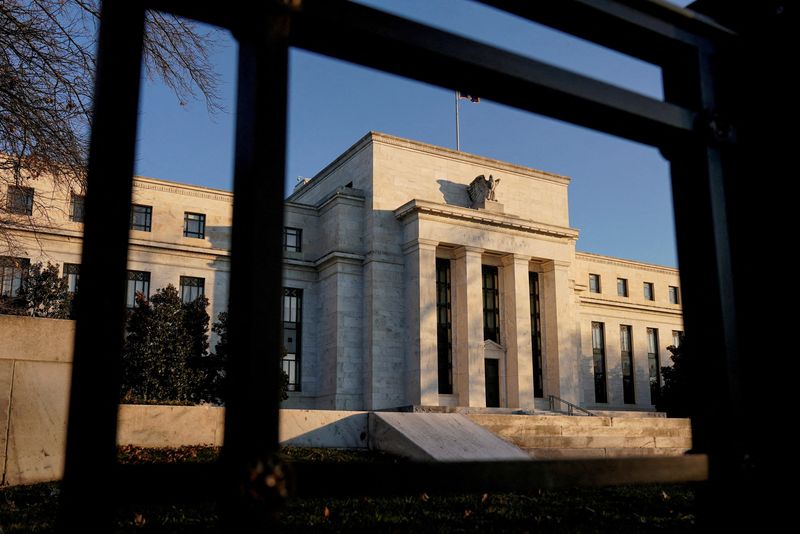
While commodity markets price in these long-term tail risks, the immediate focus of the financial community has shifted toward the White House and the looming selection of the next Federal Reserve Chair. As President Donald Trump approaches a final decision on the leadership of the central bank, analysts at Wolfe Research have identified a strategic window for the announcement that could maximize political and market impact. According to strategist Stephanie Roth, the most probable period for this revelation is a specific ninety-minute window during the January FOMC meeting. Such timing would serve as a tactical maneuver to redirect the public narrative, particularly if the incumbent Fed remains hesitant to implement the interest rate cuts that the administration has publicly championed.
The structural urgency behind this decision is underscored by the impending vacancy of Governor Miran’s seat, which is officially set to turn over on January 31. Wolfe Research suggests that the President’s nominee would logically fill this void prior to the March FOMC meeting, ensuring a fresh ideological voice is in place to influence the spring policy trajectory. This transition is further complicated by the lingering possibility that Jerome Powell might choose to remain on the Board of Governors even after his tenure as Chair concludes, a scenario that would necessitate a delicate balancing of power within the central bank’s inner circle and potentially create friction for the incoming leadership.
Market participants are already calibrating their portfolios to reflect the ideological nuances of the leading contenders, categorizing the field along a distinct spectrum of hawkishness and dovishness. Analysts perceive BlackRock’s Rick Rieder and Kevin Hassett as the relatively more dovish options, a prospect that has resonated well with equity bulls seeking lower borrowing costs. In contrast, Governor Christopher Waller and former Fed Governor Kevin Warsh are viewed through a more hawkish lens, favoring a more disciplined approach to the balance sheet. These distinctions carry significant implications for the fixed-income landscape; a Hassett appointment would likely result in a steepening of the yield curve, whereas a Warsh selection would likely act as a curve flattener.
While Rick Rieder is frequently cited as a preferred candidate among Wall Street insiders, Hassett is emerging as the potential catalyst for the most significant market volatility. Despite the intense speculation, a definitive frontrunner remains elusive, as Roth emphasizes that there is no clear "unicorn" candidate capable of satisfying all of the President’s diverse criteria. Nevertheless, institutional analysts suggest that the probability of a Kevin Hassett appointment is significantly higher than the six percent currently reflected in betting markets, indicating that the broader investing public may be underestimating the likelihood of a major shift in the leadership of the world’s most influential financial institution.