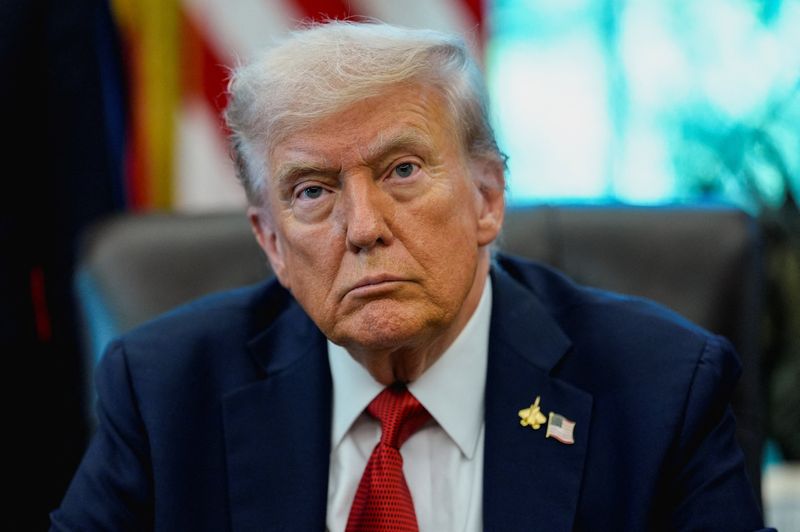
## The Return of the ‘Tariff King’: Geopolitical Tensions Spike Ahead of Crucial Davos Summit
Geopolitical tensions are escalating rapidly just days before global leaders convene for the World Economic Forum (WEF) in Davos. Former U.S. President Donald Trump, returning to the international stage and embracing his designation as the "Tariff King," is intensifying his aggressive campaign to secure Greenland while simultaneously signaling that European partners should prepare for renewed economic confrontation.
This spike in political uncertainty is already reflected in financial indicators, with gold prices soaring to a new peak above the $4,700 per ounce threshold, and Wall Street’s main volatility index showing a notable upward trend amid persisting fears over Greenland and trade. Coincidentally, a recent survey from Bank of America indicated that investor sentiment is currently at its most optimistic level since 2021.
Trump emphasized his confrontational posture by circulating a series of private communications and images overnight via Truth Social. These included a text message reportedly received from French President Emmanuel Macron, who expressed clear confusion over the Arctic territory: “I do not understand what you are doing on Greenland.”
The President also disseminated a message originating from the head of NATO, openly criticized Britain for alleged “stupidity,” and shared images that appeared to be artificially generated, depicting the American flag flying prominently over both Greenland and neighboring Canada.
These online maneuvers were part of a broader effort by Trump to solidify that his intentions regarding Greenland were firm and “no going back” was possible. Yet, alongside this hardline stance, Trump announced a limited path toward dialogue, confirming he would meet with “various parties” on the subject of Greenland on the sidelines of the WEF in Switzerland this week.
He characterized the upcoming discussions as “very interesting” and informed journalists that he did not anticipate “too much” pushback from European allies. Separately, in an interview with NBC News, the President strategically maintained ambiguity regarding the potential use of force to take control of the territory, declining to explicitly rule out military action.
Adding to the complexity, Trump simultaneously reinforced his reputation as the "Tariff King" by reviving threats of duties against key European partners. Speaking at a White House function on Friday, he publicly embraced the moniker: “I’m the tariff king and the tariff king has done a great job,” he asserted.
Ed Mills, a Washington policy analyst at Raymond James, suggested that while Trump appears fully prepared to execute his tariff threats if necessary, his actions often serve a strategic purpose. Mills explained that the President frequently threatens extreme measures to ensure that less severe outcomes are perceived as acceptable compromises. He pointed to the deliberate ambiguity surrounding the use of force over Greenland as a tactic designed to maximize pressure while preserving maximum policy flexibility, recalling Trump's earlier threat of a 25% tariff on all of Iran’s trading partners, which ultimately never materialized.
For the moment, the market impact remains somewhat tempered. According to Tobin Marcus, head of U.S. policy and politics at Wolfe Research, the principal unknowns are the sincerity of Trump’s intent, the degree of leverage possessed by Europe, and the final economic consequences of these actions.
Marcus suggested that there is sufficient uncertainty that U.S. equity markets will likely categorize the potential downside risk as predominantly hypothetical until more tangible evidence or policy actions emerge. As the global diplomatic calendar turns to Davos, Trump’s signature blend of threats, media spectacle, and carefully controlled diplomatic openings is setting the global tone—a potent reminder that the “Tariff King” has forcefully returned to the forefront of global affairs.