Gold prices hit record high above $4,600/oz on Iran unrest, Fed indictment threat
Fed Chair Powell flags DOJ probe over interest rates; Trump denies involvement
’Sell America’ trade is back on as Powell subpoena rattles markets
Five things to watch in markets in the week ahead
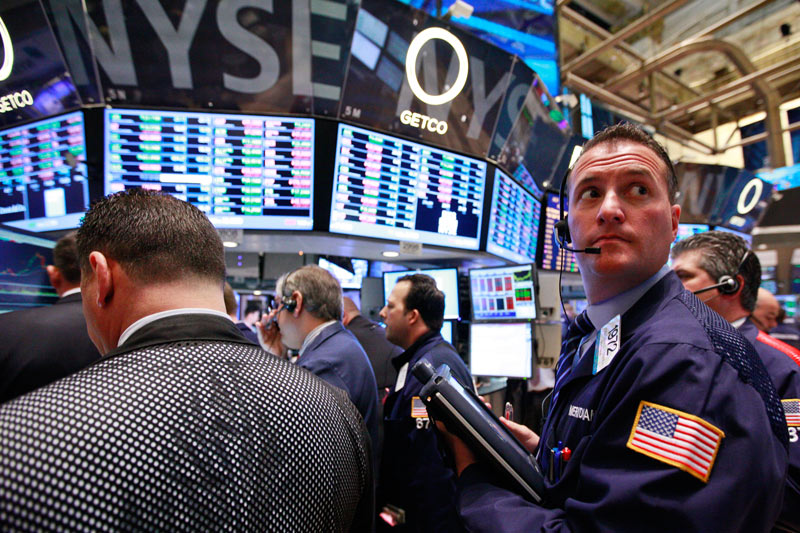
Investing.com-- U.S. stock index futures fell Monday amid heightened uncertainty over the Federal Reserve’s independence after the Justice Department opened a criminal investigation into Chair Jerome Powell’s testimony about cost overruns at a $2.5 billion renovation of the Fed’s Washington headquarters.
At 05:50 ET (10:50 GMT),Dow Jones Futuresfell 360 points, or 0.7%,S&P 500 Futuresdropped 46 points, or 0.7%, andNasdaq 100 Futuresslipped 220 points, or 0.9%.
Both the broad-basedS&P 500index and the blue chipDow Jones Industrial Averagefinished Friday’s session at new peaks, capping a winning week for the major benchmarks. The S&P 500 rose more than 1% on the week, while the Dow and theNASDAQ Compositejumped 2.3% and 1.9%, respectively.
Get more breaking news on the Fed and Wall St by upgrading to InvestingPro
Powell, in a statement late Sunday, confirmed that federal prosecutors have opened a criminal investigation related to his Senate Banking Committee testimony on the renovation of Fed office buildings, but indicated that the threats were likely motivated by the Trump administration’s repeated calls for the central bank to lower interest rates sharply.
"This new threat is not about my testimony last June or about the renovation of the Federal Reserve buildings... This is about whether the Fed will be able to continue to set interest rates based on evidence and economic conditions—or whether instead monetary policy will be directed by political pressure or intimidation," Powell said.
His comments are the most direct yet in addressing heightened political pressure on the central bank to slash rates. Trump had called for at least 2% of rate cuts in the past year, while the Fed delivered a total 0.75% of cuts in 2025, citing caution over sticky inflation and an uncertain economic outlook from Trump’s trade policies.
The Fed-White House feud also comes with Powell’s term set to expire in May. Trump said last week he was close to nominating Powell’s successor.
"Powell has explicitly characterised this as an attack on the Fed’s independence from the Trump administration," said analysts at ING, in a note. "Markets’ initial reaction agreed with that view. The combined drop in the dollar, equities and Treasuries was a reminiscence of the ’sell America’ days of last spring."
A busy week of economic data is headlined by the release Tuesday of theconsumer price indexfor December, which is expected to show headline consumer inflation remaining steady, whilecore CPIis expected to have risen slightly.
This CPI print comes after inflation data for November came in softer than expected, although analysts said this was potentially due to disruptions caused by a long-running government shutdown in late-2025.
Markets are broadly pricing in no changes to the Fed’s rates in January, after the central bank flagged a higher bar for lowering interest rates this year.
Beyond the CPI reading, theproducer price index,retail salesdata and a host of Federal Reserve speakers are also on tap this week.
In the corporate sector, the fourth-quarter earnings season is set to begin in earnest this week, with prints from several major Wall Street banks on tap.
JPMorgan Chase (NYSE:JPM) and Bank of New York Mellon (NYSE:BK) are set to report on Tuesday, while Bank of America (NYSE:BAC), Wells Fargo (NYSE:WFC) and Citigroup (NYSE:C) will report on Wednesday.
Prints from Morgan Stanley (NYSE:MS), Goldman Sachs (NYSE:GS) and asset manager BlackRock (NYSE:BLK) are due later in the week.
The earnings are expected to provide more insight into whether U.S. corporates were able to weather economic disruptions from a government shutdown and geopolitical strife in the final quarter of 2025.
Ahead of the earnings, the financial sector was under pressure after President Donald Trump called for a one-year cap on credit card interest rates, reigniting concerns over regulatory risk for the sector.
Trump said in a social media post on Saturday that he wants to impose a 10% ceiling on credit card annual percentage rates starting January 20, arguing that Americans are being “ripped off” by rates in the 20%–30% range.
Elsewhere, gold prices surged to new highs as investors sought out this safe-haven asset amid concerns over escalating unrest in Iran, mounting political pressure on the U.S. Federal Reserve and weaker U.S. jobs data.
Spot gold rose as much as 2% to a record peak of $4,601.17 an ounce. It was last up 1.8% at $4,592.84/oz.
The U.S. dollar came under pressure as well, burnishing gold’s appeal by making the yellow metal cheaper for holders of other currencies.
Additionally, oil prices have consolidated after recent gains as continued civil unrest in Iran, a key producer in the Middle East, threatened to disrupt global supplies.
Brent futures slipped 0.5% to $63.05 a barrel and U.S. West Texas Intermediate crude futures fell 0.3% to $58.77 a barrel.
Both benchmark contracts gained over 3% last week as widespread anti-government protests intensified, resulting in the biggest demonstrations against the country’s clerical establishment since 2022.
This has heightened concerns of a broader regional confrontation in this key energy-producing region.
Ambar Warrick contributed to this article