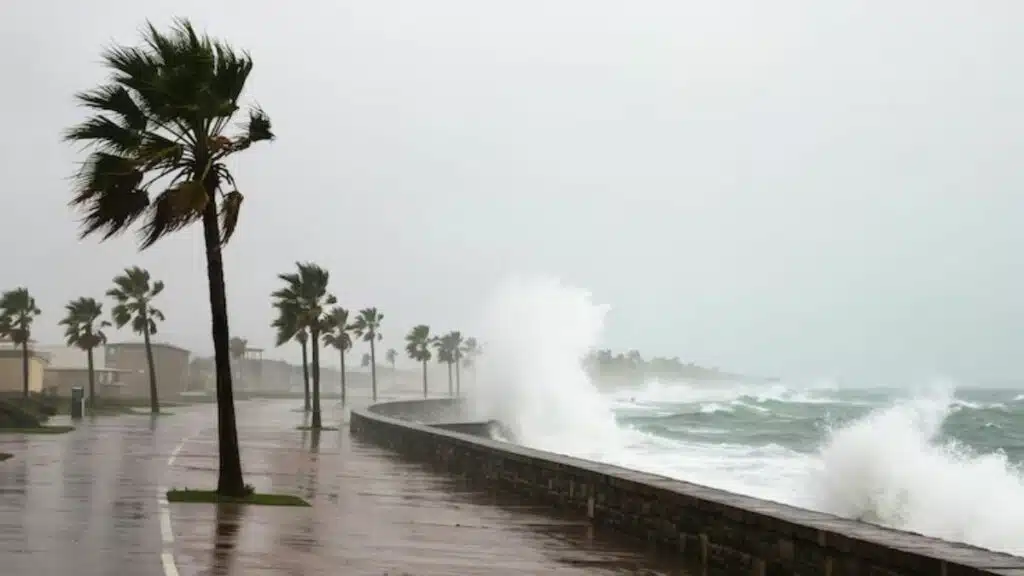
The recent transition in Morocco’s meteorological landscape—characterized by torrential rainfall, atypical thermal depressions, and significant coastal swells—has prompted a sophisticated debate among policymakers and market observers alike. After a decade defined by persistent aridity, this sudden climatic volatility raises critical questions regarding whether the region is witnessing a fundamental shift in seasonal patterns or merely a transient anomaly within a broader warming trend. According to Professor Mohammed Said Karrouk, a leading climatologist, understanding these developments requires a nuanced distinction between immediate atmospheric perceptions and the structural realities of the North African climate.
To provide necessary context, one must recognize that Morocco’s baseline climate is fundamentally dictated by the subtropical Azores High, which renders aridity the structural norm. However, this historical dryness has periodically been punctuated by intense pluvial cycles, a rhythm that has historically sustained the nation’s socio-economic development. Professor Karrouk emphasizes that a single season of abundance does not invalidate the long-term trend of water scarcity. Instead, the current phenomenon is the result of a rare confluence of distinct meteorological drivers. Specifically, the influence of the La Niña phase in the Pacific has weakened the Azores High, permitting cold polar air masses from the North American corridor—rather than the traditional Scandinavian route—to penetrate southward.
This cooling effect has intersected with the emergence of "atmospheric rivers," which act as high-capacity corridors for tropical moisture. When these corridors are channeled by the jet stream toward the Northeast Atlantic and North Africa, their collision with polar air generates profound depressions. The resulting synergy of cold air, tropical humidity, and an intensified jet stream has catalyzed the intense precipitation and gale-force winds observed recently. While such a configuration is physically consistent with regional dynamics, its simultaneous occurrence remains statistically infrequent, challenging traditional predictive models used by agricultural and infrastructure planners.
Furthermore, the prevailing narrative of a "seasonal shift" requires careful qualification. While winter temperatures have exhibited unusual fluctuations, the underlying trajectory remains one of global thermal elevation and extended warm seasons. Professor Karrouk notes that the primary transformation lies in the distribution and intensity of the water cycle rather than a chronological displacement of the seasons themselves. Global warming effectively amplifies both ends of the spectrum; a warmer atmosphere possesses a higher capacity for water vapor, which intensifies both the severity of droughts and the volume of episodic rainfall. This is further compounded by the thermal inertia of the oceans; the record-breaking sea temperatures of 2023 continue to release stored energy, fueling the erratic weather patterns currently impacting the Moroccan coastline.
Looking ahead, the predictability of such events remains a complex challenge for climate scientists and institutional investors. As La Niña moves toward a neutral state toward the end of the year, the atmospheric equilibrium is likely to shift once more. Ultimately, the professional consensus suggests that while spectacular rainfall events may provide temporary relief to reservoirs, aridity remains the dominant characteristic of the Moroccan climate. Stakeholders must therefore view these episodes not as a return to a former stability, but as a manifestation of a more volatile and energetic climate system where structural dryness is increasingly interrupted by high-impact weather events.
Social