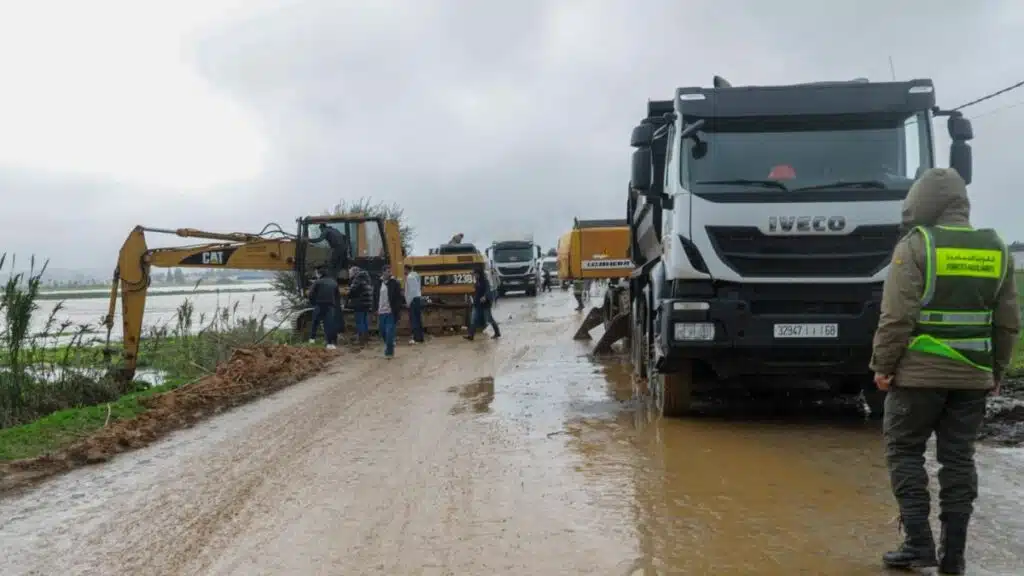
In a decisive move to mitigate the humanitarian and economic impact of severe meteorological disruptions, King Mohammed VI has issued high instructions for the immediate intervention of the Royal Armed Forces (FAR) alongside a massive deployment of logistical and human resources. This sovereign mandate underscores a high-level strategic commitment to protecting populations and critical infrastructure across the Kingdom’s flood-stricken regions. The response, characterized by its scale and operational urgency, involves a multi-agency framework where military units work in close synergy with the Ministry of the Interior and local administrative bodies to facilitate the emergency transport and sheltering of displaced citizens.
The gravity of the situation was further scrutinized during an intensive session of the National Monitoring Committee held in late January at the Ministry of the Interior. This high-level assembly, which convened ministers and institutional stakeholders, focused specifically on the unfolding crisis in Ksar El Kébir and its surrounding vicinities. The deliberations provided a platform for a comprehensive situational analysis, evaluating the extent of property damage and the efficacy of current deployment strategies. Central to these discussions was the acknowledgment that the current crisis stems from a convergence of exceptional rainfall and systemic hydraulic pressures. Notably, several of the region’s reservoirs have reached a maximum capacity of 100 percent, necessitating a sophisticated approach to dam management and the regulation of hydraulic flows to prevent further inundation.
From a technical and operational perspective, the government’s strategy emphasizes the optimization of inter-departmental coordination to ensure that relief efforts are both efficient and adaptive. The National Monitoring Committee has prioritized the stabilization of water levels in the Loukkos and Sebou river basins, which are currently facing unprecedented volumes. By implementing qualitative support measures and enhancing the granularity of field data, authorities aim to contain the perimeter of submerged areas, thereby safeguarding agricultural assets and public infrastructure from long-term degradation. This rigorous oversight reflects a broader institutional commitment to resilience, ensuring that state resources are mobilized with the precision required to handle volatile environmental variables.
Looking ahead, the state's posture remains one of maximum vigilance and operational readiness. The government has signaled that this high-intensity monitoring phase will persist until weather conditions stabilize and the immediate risks to public safety are neutralized. Beyond the physical relief efforts, there is a concerted effort to provide comprehensive support to affected individuals, reflecting a holistic approach to crisis management. In closing their assessment, officials lauded the spirit of responsibility demonstrated by field actors while reiterating a crucial appeal to the public. Residents in high-risk zones are urged to exercise extreme caution and strictly adhere to the directives issued by local authorities, as the collective adherence to safety protocols remains a vital component in minimizing the loss of life and securing the Kingdom’s socio-economic stability during this period of climatic volatility.
Social