The northern regions of the Kingdom of Morocco are currently contending with a significant hydrological challenge following an intense period of atmospheric instability. The city of Ksar El Kébir, strategically situated along the banks of the Oued Loukkos, has emerged as a focal point for localized crisis management as rising water levels threaten urban infrastructure and residential stability. This regional volatility is the direct result of substantial pluviometric recorded between January 29 and the early hours of January 30, which saw precipitation levels reach critical thresholds across the northern provinces. Data indicates that Tafrant in the Taounate province recorded a peak of 71 mm, followed by Msila at 55 mm and Taounate at 45 mm, while coastal hubs such as Tangier and Fnideq registered 24 mm and 20 mm respectively.
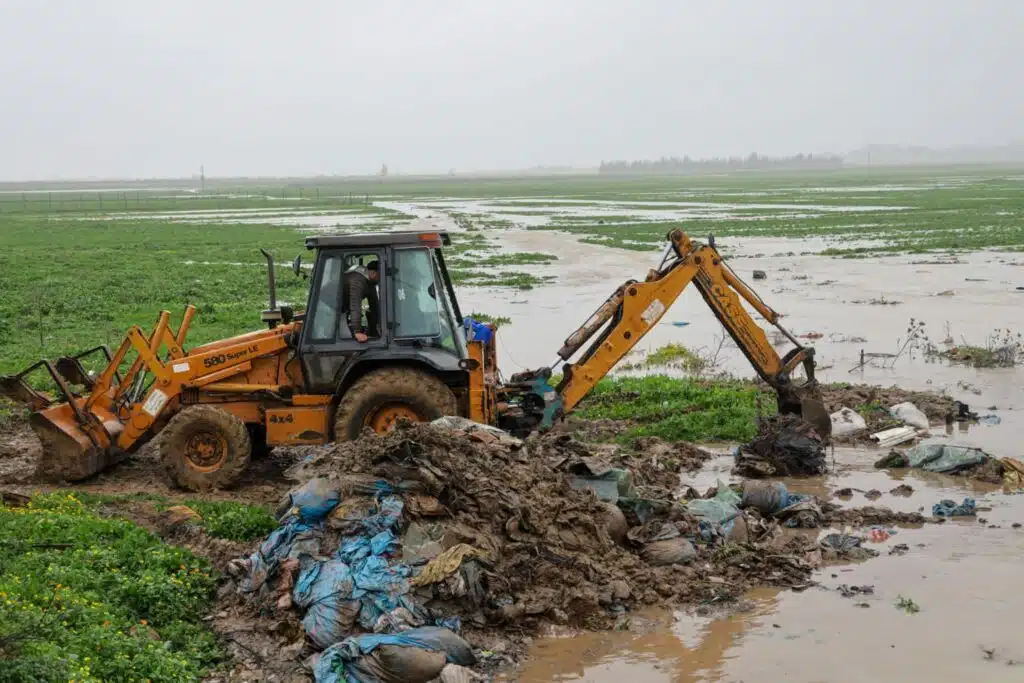
In response to this mounting environmental pressure, the provincial authorities in Larache have orchestrated a comprehensive multi-agency mobilization. Under the direct supervision of the Provincial Committee for Vigilance and Monitoring, a coordinated task force—comprising the Loukkos Hydraulic Basin Agency, the Regional Multiservice Company, and the Regional Directorate of Equipment and Water—has been deployed to mitigate the systemic risks posed by the inundation of low-lying districts. This institutional response is characterized by a sophisticated logistical strategy intended to safeguard both public assets and private commercial interests.
A critical component of this risk mitigation strategy involves the technical management of the Oued El Makhazine dam, which has reached a saturation point with a filling rate of 100 percent. To prevent uncontrolled overflows, authorities have implemented a program of regulated and limited water releases, a delicate balancing act designed to manage downstream volume without overwhelming the already saturated drainage systems of Ksar El Kébir. Simultaneously, ground operations have focused on the reinforcement of the Oued Loukkos riverbanks through the deployment of sand barriers and the intensive clearing of sanitation channels to facilitate more efficient effluent flow.
From an operational standpoint, the municipality has adopted a proactive posture by implementing temporary, programmed electricity deactivations in high-risk zones to prevent infrastructure failure and ensure public safety. These measures are necessitated by a complex convergence of geographical and seasonal factors, including the topographical vulnerability of the Loukkos basin and the complicating effect of the rising tide, which currently obstructs the natural discharge of rainwater into the Atlantic. While official reports suggest that these interventions have successfully limited the expansion of affected zones and curtailed material losses, the province remains in a state of maximum alert.
Furthermore, the authorities have found it necessary to address a modern dimension of crisis management: the proliferation of digital misinformation. The circulation of sophisticated, AI-generated video content on social media platforms, falsely depicting catastrophic flooding, has forced officials to issue formal clarifications to maintain public order and prevent unnecessary panic. As the region awaits more favorable meteorological conditions, the focus remains on infrastructure resilience and the continued protection of the local economic fabric against the backdrop of an increasingly volatile climate landscape.
Social