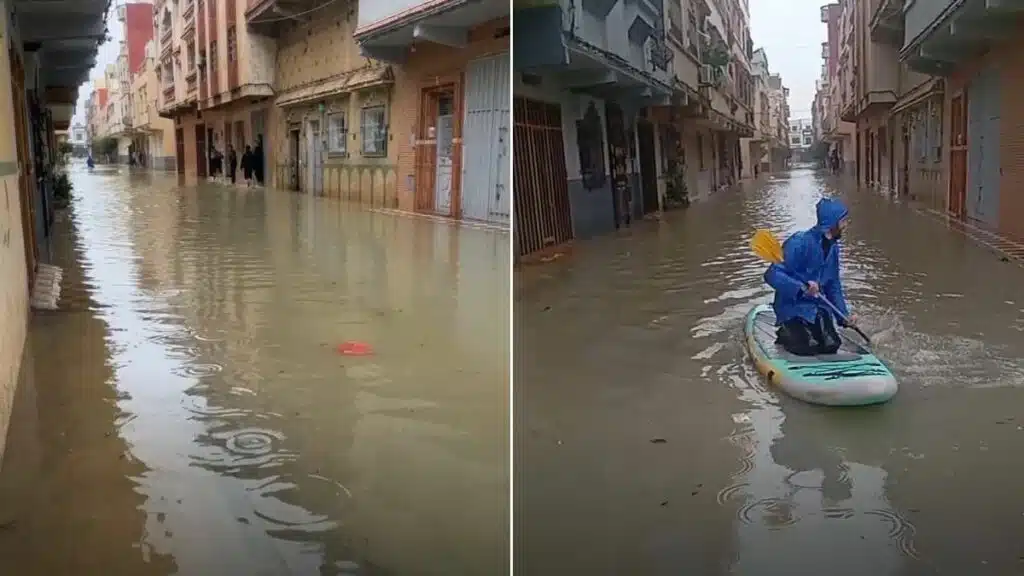
The northern regions of the Kingdom are currently contending with a significant meteorological episode that has evolved from a seasonal weather event into a formidable operational challenge for regional infrastructure and commerce. A convergence of torrential rainfall and escalating river levels has placed several key economic and administrative hubs, including Tangier, Tetouan, Chefchaouen, and Ksar El Kébir, under considerable systemic strain. This period of climatic volatility has necessitated an immediate and coordinated response from state authorities to mitigate risks to both residential assets and critical logistics networks, underscoring the inherent vulnerability of regional supply chains to extreme weather patterns.
Central to the unfolding situation is the temporary suspension of operations at the Tetouan–Sania Ramel Airport. Following a formal directive from the Ministry of Transport and Logistics, the facility was shuttered on Tuesday, January 29, 2026, as a precautionary measure to ensure passenger safety and permit essential technical assessments of the airfield's integrity. This suspension reflects the extraordinary intensity of the precipitation, which reached 57 mm in Chefchaouen and 23 mm at Tangier-Port within a single twenty-four-hour window. While such interruptions are tactically necessary to maintain long-term aviation standards, they present immediate logistical hurdles for a region that serves as a vital gateway for Mediterranean trade and transit.
The hydrological crisis is further compounded by the saturation of the Oued Al Makhazine dam, which has reached a critical 100% capacity threshold. Having absorbed a cumulative average of more than 600 mm of precipitation since September, the reservoir’s peak levels have necessitated controlled water releases that have directly impacted the lower Loukkos basin. In Ksar El Kébir, the resulting surge of the Oued Loukkos has triggered an escalation to maximum alert levels. Azzedine Aittalab, the Provincial Director of Equipment and Water for Larache, has confirmed that emergency engineering interventions are currently underway to install provisional barriers. These defensive measures are designed to safeguard exposed residential zones and prevent the significant property damage typically associated with such rapid hydraulic surges.
From a utility and continuity perspective, the Société Régionale Multiservices Tanger-Tétouan-Al Hoceïma (SRM-TTA) has initiated a robust mobilization of technical resources and personnel. By collaborating with national partners and leveraging the support of other regional service providers, the SRM-TTA is working to ensure the uninterrupted delivery of water, electricity, and sanitation services. This multi-agency strategy, which includes the Loukkos Hydraulic Basin Agency and various municipal departments, aims to stabilize the regional infrastructure footprint despite the ongoing "Red Alert" status in provinces such as Chefchaouen.
As the northern provinces remain under high-level vigilance, the administrative focus remains fixed on the dual priorities of public safety and infrastructure resilience. The Ministry has signaled that the reopening of the regional aviation hub at Tetouan will depend entirely on the completion of rigorous safety audits, ensuring that all technical conditions are satisfied before commercial operations resume. Until this exceptional climatic episode subsides, the sustained mobilization of safety and engineering services remains the primary safeguard against the broader economic disruptions threatened by this period of atmospheric instability.
Social