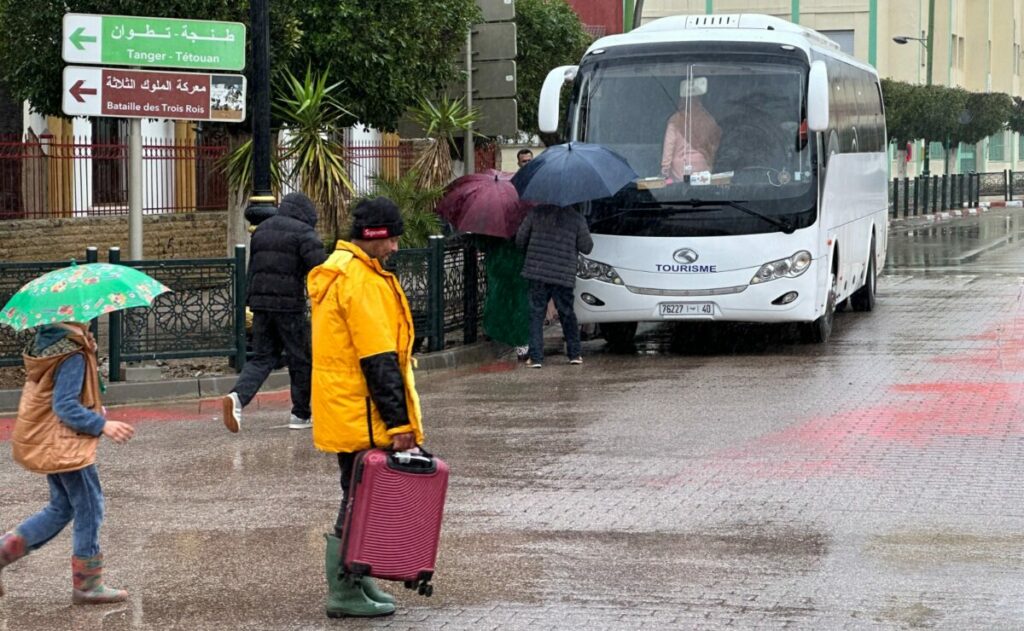
The administrative landscape of the Larache province has shifted from a state of crisis management to one of systematic recovery and stabilization. Following a period of significant atmospheric turbulence that necessitated widespread evacuations in Ksar El Kébir, local authorities officially sanctioned the complete reintegration of the local population effective February 19. This decision reflects a meticulous assessment of the region’s structural integrity and the successful mitigation of environmental risks that previously threatened the safety of the urban populace. The provincial government’s formal communiqué signals a pivotal transition, emphasizing that the rigorous safety protocols established during the height of the meteorological crisis have now been fully satisfied.
The logistical success of this operation owes much to the synchronized efforts of field interventions spearheaded by public authorities and specialized technical services. Over the preceding days, these units conducted exhaustive reviews of the city’s residential infrastructure and essential utility networks to ensure that the environmental conditions conform to stringent national safety standards. This systematic approach to risk management highlights the increasing sophistication of regional response frameworks, where the focus has evolved from mere emergency relief to a comprehensive doctrine of rapid restoration and infrastructure resilience. By ensuring that every neighborhood met specific technical benchmarks before authorizing the return, the authorities have prioritized long-term public security over a hasty, uncoordinated repatriation.
Beyond the technical metrics of the recovery, the social dimension of the evacuation and subsequent return process provides a compelling narrative of civic resilience. Local officials have explicitly commended the exemplary level of cooperation and public consciousness exhibited by the residents of Ksar El Kébir throughout the various phases of this operation. Such institutional recognition underscores the importance of public-private alignment in the face of regional volatility. By adhering to the phased directives issued by the Larache provincial leadership, the community facilitated a smoother transition, effectively minimizing the potential for logistical bottlenecks or secondary security incidents during the sensitive period of movement.
While the immediate threat posed by the inclement weather has subsided, the administrative apparatus remains in a state of heightened vigilance. The local government has clarified that the authorization for residents to regather in their homes is not the conclusion of the intervention, but rather the commencement of a broader normalization phase. Field monitoring and site-specific support will persist in the coming weeks to oversee the restoration of daily life and the repair of any residual damage to public assets in the city and its surrounding environs. This enduring mobilization serves as a strategic buffer, ensuring that the return to domesticity for the affected families is accompanied by the necessary state-led oversight.
Ultimately, the movement of thousands of citizens back to their homes represents more than a logistical milestone; it serves as a critical indicator of regional stability and administrative transparency. The emotional resonance of this return is anchored by the technical assurance provided by the state, bridging the gap between disaster response and economic continuity. As Ksar El Kébir navigates the aftermath of these floods, the integrated response of the Larache provincial authorities offers a template for managing environmental disruptions with professional precision, ensuring that the "joy of returning home" is underpinned by a verified and secure environment.
Social