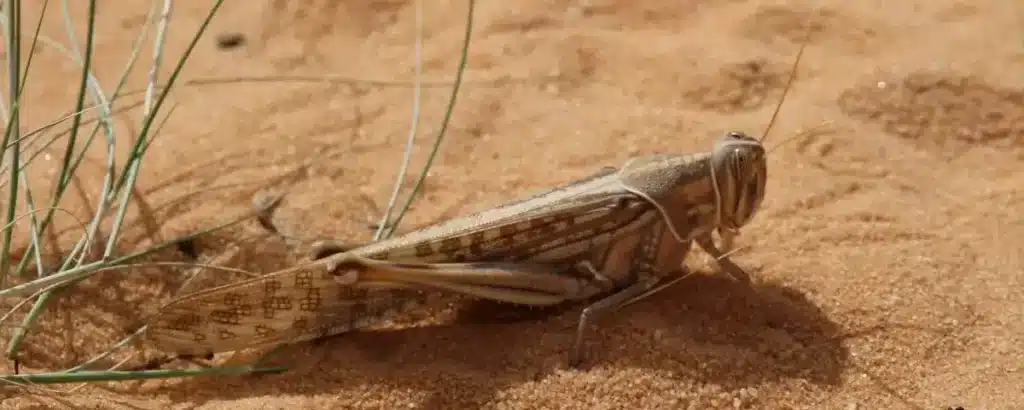
Agricultural authorities in Morocco’s southern provinces are currently navigating a delicate biological transition as desert locust populations exhibit increasing density across the regions of Laâyoune, Boujdour, and Dakhla. While recent visual evidence of locust concentrations in urban centers and along the strategic corridor between Dakhla and Boujdour has raised public concern, the situation is presently characterized by experts as a managed resurgence rather than a full-scale invasion. This distinction is critical for regional economic stakeholders, as the current phase represents a window of opportunity where intensive phytosanitary interventions are most effective. The progression began in late 2025, with initial urban sightings reported in mid-January 2026, marking a shift from the solitary state typical of these insects toward a more concentrated, group-oriented behavior.
The underlying catalyst for this phenomenon is environmental, rooted in the atypical meteorological patterns observed in the Sahara. Exceptional rainfall throughout the winter months created optimal breeding conditions; however, the subsequent desiccation of vegetation has forced solitary locusts to congregate in remaining green patches. This density-dependent pressure triggers a physiological and behavioral metamorphosis toward the gregarious phase, characterized by changes in pigmentation and the formation of destructive swarms. Data from the National Locust Control Center (CNLA) illustrates the scale of the challenge and the efficacy of the response to date. In January 2026, surveillance identified 396 zones of winged locusts and 262 larval zones across the three southern regions. By February, targeted operations successfully reduced these figures to 213 grouped winged zones and 59 larval zones. The significant decline in larval populations is a particularly vital metric, indicating that current containment strategies are effectively disrupting the life cycle before the insects reach their most ravenous stage.
Geographically, the epicenter of larval development remains concentrated within the Gueltat Zemmour region and the axis connecting Boujdour and Dakhla, while winged groups are currently restricted to the northern peripheries near Tan-Tan and Guelmim. Despite the logistical complexities of the Saharan terrain, the Moroccan state has deployed a sophisticated institutional framework to mitigate agricultural risk. The CNLA has intensified its field operations, operating under a robust national intervention plan that draws on lessons learned from the major 2003-2005 crisis, during which five million hectares were treated to prevent economic collapse. Should the situation escalate, the command structure is designed to shift from the CNLA to an inter-ministerial Central Command Post in Rabat, supported by thirteen regional coordination centers. Seven of these centers form a primary line of defense along the southern and southeastern borders, acting as a sentinel against further influxes from Mauritania, which remains the primary variable in the long-term regional outlook. At present, the absence of organized swarms suggests that while the biological threat is persistent, the systematic application of preventative measures continues to safeguard the kingdom’s southern agricultural assets.
Social