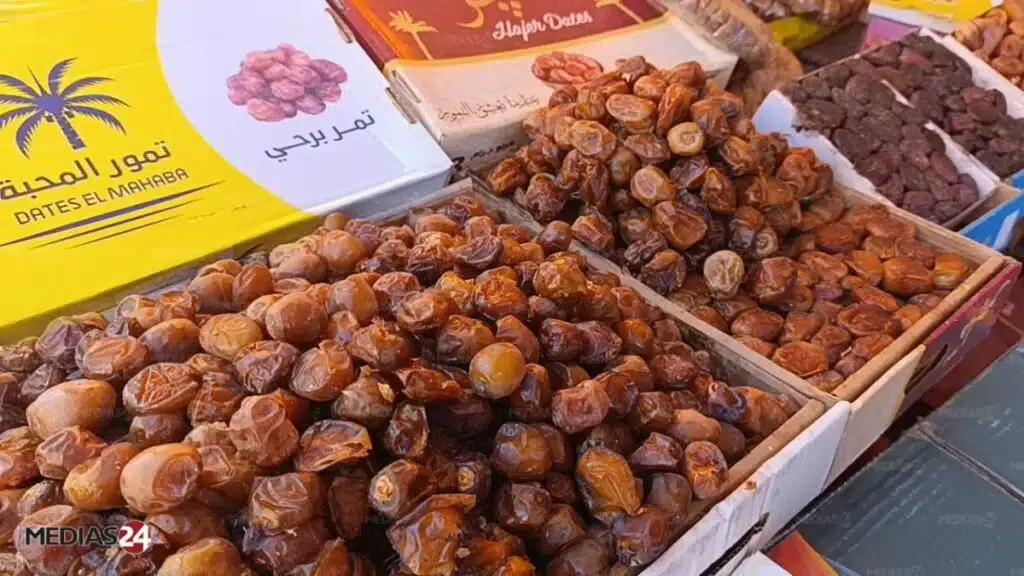
As the kingdom prepares for the holy month of Ramadan, the Moroccan date market—a vital pillar of the nation’s agrifood sector—is exhibiting remarkable resilience and strategic depth. At the historic Derb Mila wholesale hub in Casablanca, the atmosphere is defined by a palpable abundance of high-quality domestic yield, signaling a significant improvement in both volume and caliber over the previous agricultural cycle. This surplus is not merely a seasonal fluctuation but the result of a concerted effort to enhance the domestic supply chain during a period of peak national consumption.
To fortify this momentum, the Moroccan government has introduced a targeted import licensing regime designed to shield local growers from external volatility. This protectionist measure ensures that while the market remains diversified with varieties from the United Arab Emirates, Saudi Arabia, Egypt, Tunisia, and Algeria, the domestic producer remains the primary beneficiary of the seasonal demand surge. By balancing indigenous supply with international trade, the administration is effectively managing price stability and asserting its food sovereignty in a critical commodity segment.
The current market architecture reveals a sophisticated price segmentation tailored to diverse consumer cohorts. At the entry level, the Bou S’hamri variety maintains a stable range between 20 and 25 DH per kilogram, while the mid-tier segment is anchored by the Jihel—a staple for traditional culinary preparations—and the imported Sukkari, which is currently priced between 35 and 42 DH. However, the apex of the market remains dominated by the Feggous and the prestigious Majhoul. Often referred to as the "king of dates," the Majhoul’s market dominance is underpinned by its superior biological profile; data from the National Institute of Agronomic Research (INRA) confirms a high-value pulp ratio of 93 percent compared to a minimal stone weight. While wholesale prices for smaller Majhoul calibers at the Casablanca hub fluctuate between 60 and 100 DH, retail markups in neighborhood stalls are expected to push shelf prices toward the 120 DH threshold, reflecting the premium nature of the harvest and the associated logistical costs.
Beyond mere pricing, the Moroccan date industry is undergoing a structural transformation through a rigorous labeling and certification policy. With a genetic heritage comprising 450 distinct varieties, the state is leveraging "Signs of Origin and Quality" (SDOQ) to orient consumers toward authentic products. Currently, nine flagship varieties benefit from these protections, including the Protected Geographical Indications (PGI) for the Majhoul of Tafilalet, Aziza Bouzid of Figuig, Boufeggous, Bouittob of Tata, Jihel of Drâa, Outoukdim of Toudgha Tinghir, Bousthammi Noire of Drâa, and Assiane of Figuig, as well as the "Najda" Agricultural Label. This framework serves as a strategic tool to prevent commercial usurpation and provides a transparent ecosystem that guarantees fair remuneration for producers by streamlining sales circuits.
This commitment to quality is further validated by the nutritional and sensory profiles of the fruit. Moroccan dates are increasingly recognized for their functional health benefits, with 66 percent of local varieties offering the high fiber content essential for metabolic recovery during the fast. From a sensory perspective, the market is moving toward an appreciation of terroir, where complex notes of caramel, honey, and liquorice define the premium experience. As Morocco navigates this period of high demand through record production and intelligent regulatory oversight, the state remains vigilant regarding market integrity. The reactivation of the national 5757 hotline ensures that the transition from wholesale abundance to retail consumption remains transparent, protecting the consumer from speculative inflation and ensuring the season's bounty remains accessible across all socio-economic strata.
Social