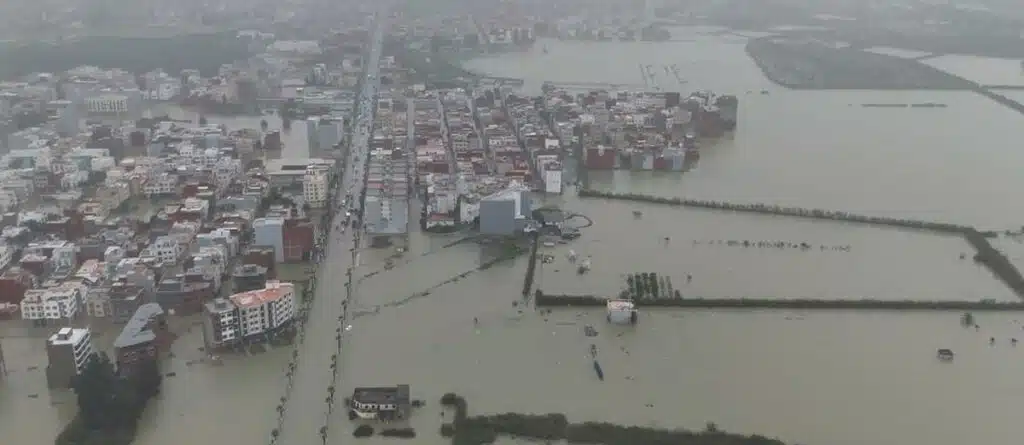
The hydrological crisis impacting the northern and central regions of Morocco reached a critical threshold this Friday, February 6, as water levels in the city of Ksar El Kébir and its surrounding territories experienced a significant and rapid escalation. According to the latest field intelligence and sophisticated meteorological modeling, the region is currently grappling with a persistent and intensifying flood threat. Current projections indicate that the hydrological situation has not yet reached its peak, with experts warning of a potential deterioration in conditions that could further elevate the risk profile for local infrastructure and residential centers.
In response to this escalating environmental challenge, the Ministry of the Interior has orchestrated an expansive logistical operation characterized by a preemptive strategic framework. This high-level mobilization has focused on the systematic and progressive evacuation of residents from several communes identified as being within high-risk flood zones. The operation, which prioritizes the preservation of life and the mitigation of potential damage, has utilized an array of logistical assets to ensure the safe and orderly transfer of affected populations to secure locations.
To date, these rigorous preventive interventions have resulted in the mass displacement and relocation of 154,309 individuals across multiple provinces. The scale of this demographic shift underscores the gravity of the current climate event. A granular analysis of the data reveals that the province of Larache has been the primary focal point of these efforts, with a staggering 112,695 people evacuated. This was followed by a significant mobilization in the province of Kénitra, where 23,174 residents were moved to safety. In the inland regions, the province of Sidi Kacem recorded the evacuation of 14,079 individuals, while in Sidi Slimane, authorities successfully relocated 4,361 people.
The Ministry of the Interior has underscored that the vast majority of the inhabitants of Ksar El Kébir have already vacated the urban center in alignment with the proactive measures adopted by state authorities. This mass movement reflects the government's commitment to anticipatory risk management in the face of volatile environmental variables. However, the immediate outlook remains cautious; as field data continues to arrive, the ministry emphasizes that the threat remains active. The synchronization of unfavorable weather patterns and rising water levels suggests that the current hydrological volatility is far from over.
In light of these conditions, government officials have issued a mandate for maximum vigilance among the citizenry. There is a firm directive for residents to avoid any attempts to return to the affected areas until a formal de-escalation of the risk level is announced. As the situation continues to evolve, the focus remains on maintaining the integrity of the safety perimeter and ensuring that no lives are compromised by premature re-entry into zones where the hydrological stability has yet to be restored. Authorities continue to monitor the situation around the clock, prepared to adjust their operational response as new meteorological data becomes available.
Social