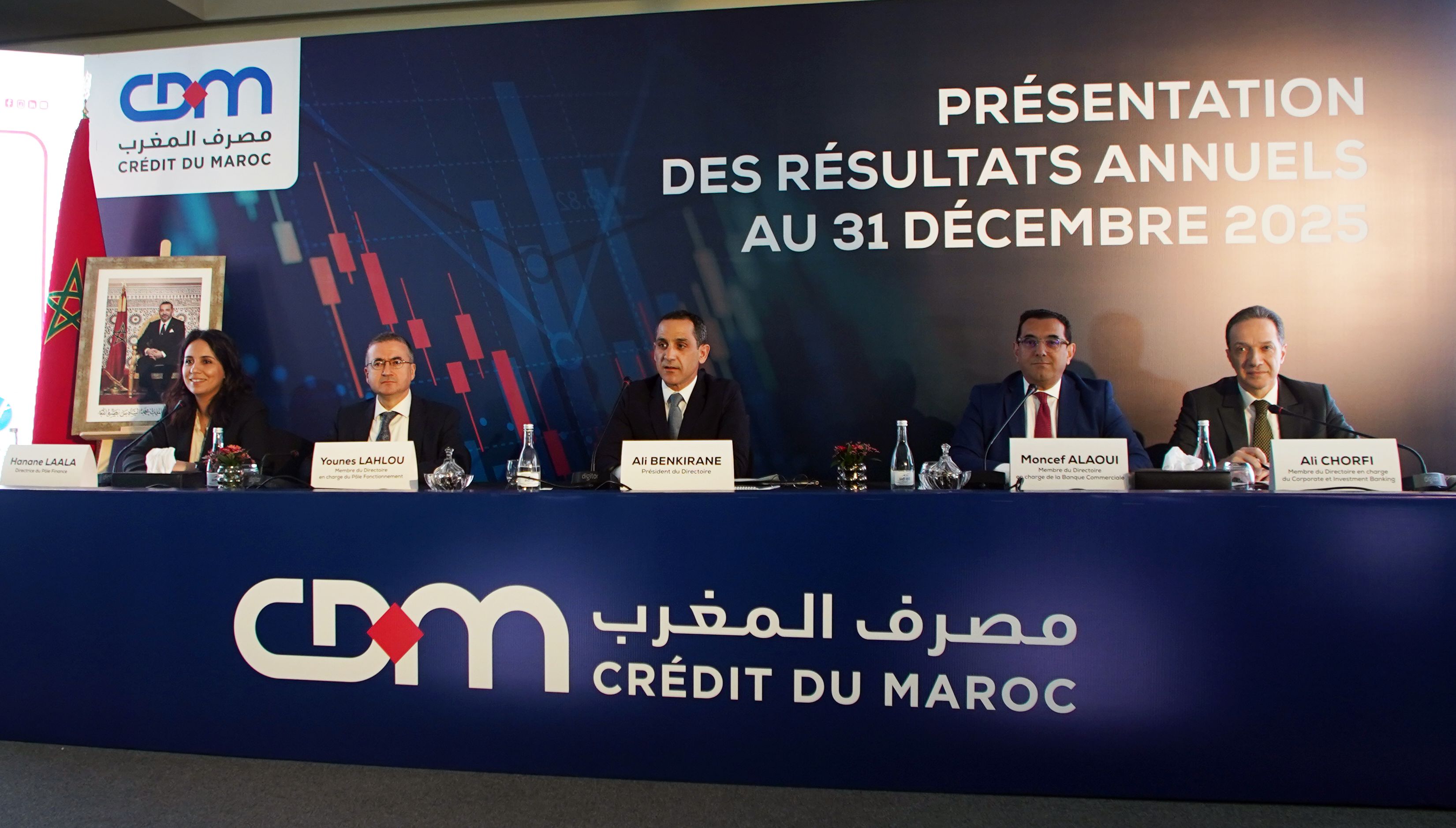
Crédit du Maroc has reached a significant strategic inflection point, as evidenced by its robust financial performance for the 2025 fiscal year. Since the entry of Holmarcom Group as a majority shareholder, the institution has been navigating a meticulously defined roadmap aiming for 2028. Ali Benkirane, Chairman of the Management Board, recently asserted that the bank has already traversed approximately two-thirds of this transformative journey. This progress signals a fundamental shift from cyclical gains to structural growth, underpinned by a resilient business model that has been systematically reinforced over the past three years. The management’s discourse emphasizes that this momentum is not merely a product of favorable market conditions but is the result of a deliberate, balanced expansion across all business lines.
The commercial vitality of the bank is reflected in its loan book, which expanded by 11% to reach 62.86 billion dirhams by the end of 2025. Corporate financing served as a primary engine for this growth, surging 12.2% to 37.38 billion dirhams. This uptick was largely propelled by a significant 16.6% increase in both equipment loans and real estate development financing, highlighting the bank's role in supporting national economic infrastructure. Simultaneously, the retail segment maintained a steady trajectory. Under the strategic banner of the "family bank," household financing grew by 4.8% to 22.28 billion dirhams, with consumer credit showing a sharp 11.2% rise and mortgages posting a disciplined 3.3% increase. Moncef Alaoui, overseeing Commercial Banking, noted that this sustained growth in customer credit—10% in 2024 followed by 11% in 2025—stems from a widened client base and heightened commercial agility.
On the liability side, the bank successfully optimized its resource cost, as evidenced by an 11.6% rise in demand deposits, which climbed from 39 billion to 44.5 billion dirhams. This liquidity was complemented by a strong performance in asset management, with mutual fund (OPCVM) outstandings reaching 11.7 billion dirhams. These operational successes translated into a consolidated Net Banking Income of 3.56 billion dirhams, an 8% increase. The net interest margin grew by 10.4% to 2.68 billion dirhams, aided by the contributions of the leasing and factoring arms. Furthermore, fee-based income rose by 7.3% to 494 million dirhams, bolstered by specialized subsidiaries in wealth management and brokerage, as well as a dynamic performance in international trade and bancassurance.
Profitability metrics indicate a bank in a state of high operational efficiency. The Gross Operating Income rose 12.8% to 1.91 billion dirhams, while the cost-to-income ratio improved significantly by 228 basis points to settle at 46.3%. This efficiency was achieved alongside a sustained investment program, with 248 million dirhams dedicated primarily to technological transformation and operational capacity. Meanwhile, the bank’s risk management remains characterized by a proactive and prudent stance. The cost of risk fell by 3.8% to 383 million dirhams, and the coverage ratio for non-performing loans improved to 89.5%.
The bottom line reflects this comprehensive strengthening, with Net Income Group Share rising 16.5% to 864 million dirhams. From a regulatory perspective, Hanane Laala, CFO, confirmed a robust solvency profile with a Tier 1 ratio of 12.16% and a total solvency ratio of 14.85%. Consequently, the Board will propose a dividend of 48 dirhams per share, representing a 15% increase and a 65% payout ratio. Looking ahead, the focus shifts toward accelerating execution and elevating service quality, leveraging the newly stabilized operational foundations to convert recent gains into long-term sustainable performance.
Bourse
Vendredi 13 Fevrier 2026