Here is what Morgan Stanley thinks will likely to shape stocks in 2026
Best EV Infrastructure Stocks With Strong Growth Potential, According to WarrenAI
What are the next steps for U.S. housing legislation
Street Calls of the Week
Investing.com-- Here is your Pro Recap of the top takeaways from Wall Street analysts for the past week.
InvestingProsubscribers always get first dibs on market-moving AI analyst comments. Upgrade today!
Costco
What happened?On Monday, Roth downgradedCostco Wholesale Corp (NASDAQ:COST)to Sell with a $769 price target.
*TLDR: Costco’s metrics weaken despite an earnings beat. Competition intensifies; valuation screams downside risk.
What’s the full story?Costco beats on 1Q earnings, but Roth smells blood in the water. Renewal rates slip again—global to 89.7%, US/Canada to 92.2%—while paid member growth crawls to a pathetic +400k q/q, even with new clubs popping open. Strip out those openings, and the analysts figure memberships are shrinking. Comp traffic decelerates to +3.1% y/y, and app downloads plunge post-Black Friday. The warehouse king’s moat is cracking.
Meanwhile, the barbarians sharpen their axes. Walmart pours billions into Sam’s Club, accelerating openings to 15 a year after a seven-year nap, and Yelp shows Sam’s locations gaining love while Costco’s fade. BJ’s Wholesale charges into new territories with 14 clubs slated for FY’25 and capex exploding. Add shrinking household sizes—down to 2.5 souls—and delayed formations, and Costco faces structural rot masked by COVID’s fleeting grace.
At is for sale! 27x EV/NTM EBITDA—well above the 10-year mean—and 43x forward P/E, the stock screams overripe. Peers like BJ’s trade at half that. Risk skews violently downside; the analysts slash the target to $769 from $906.
In this market, even a whisper of a miss triggers a rerating bloodbath.
Crescent Energy
What happened?On Tuesday, Evercore resumed coverage onCrescent Energy Co (NYSE:CRGY)at Outperform with a $13 price target.
*TLDR: Crescent Energy acquired VTLE, becoming a top-ten producer. Shares struggle; may pivot to selling assets.
What’s the full story?Crescent Energy’s freshly closed VTLE grab catapults it into the top-ten independent U.S. oil and gas ranks, pumping nearly 400 MBoe/d across a diversified three-basin empire with a fattened Permian footprint ripe for more deals. Evercore underwrites the play to north of 2x cash-on-cash returns, fully covered by VTLE’s existing production, delivering instant pops to free cash flow and NAV per share. The team’s magic lies in high-grading the assets—slashing rigs from four to one or two, squeezing $90-100 million in synergies (probably lowballed) via drilling efficiencies, cost cuts, and smarter marketing—building on proven Eagle Ford wizardry where wells outperform by 20% and expenses plummet.
Yet in this brutal 2025 oil slump, CRGY shares languish down sharply YTD, hammered by the debt load and fading commodity prices amid a competitive bid process. The real kicker: private asset markets trade way ahead of public E&P equities, casting a shadow over the classic acquire-and-exploit model.
Evercore eyes a pivot—CRGY flipping from buyer to seller, leveraging its sharp team to unlock value on the exit ramp.
Procter & Gamble
What happened?On Wednesday, Jefferies upgradedProcter & Gamble Company (NYSE:PG)to Buy with a $179 price target.
*TLDR: Tough 2025 precedes P&G’s stronger 2026. Cheap valuation despite improving earnings outlook.
What’s the full story?A challenging 2025 for Procter & Gamble paves the way for a stronger 2026, as Jefferies sees earnings trends improving after fiscal 2026 and 2027 estimates have been trimmed about 7% since January.
Yet the market remains skeptical. PG shares trade at just 20 times 2027 earnings—the cheapest since 2018, when revenue growth hovered near zero and well below the 10-year average multiple of 22 times.
Jefferies sets a $179 price target, applying 24 times—one turn above the five-year average—to its $7.47 estimate for 2027 earnings, reflecting accelerating growth ahead.
Investors, take note: valuation rarely stays this depressed when fundamentals turn.
PayPal
What happened?On Thursday, Morgan Stanley downgradedPayPal Holdings Inc (NASDAQ:PYPL)to Underweight with a $51 price target.
*TLDR: PayPal downgraded; AI disruption looms. Growth is slowing.
What’s the full story?Morgan Stanley whacked PayPal with an Underweight downgrade, citing four grim realities that expose the payments dinosaur’s fading mojo. Branded Checkout bleeds share as the bank’s analysts sneer at management’s bungled fixes—too slow, too clunky, still friction-riddled—inviting relentless wallet rivals and pricing squeezes, much like a riverboat gambler watching his stack dwindle.
Agentic commerce looms as the ultimate overhang: AI agents poised to disrupt the empire, yet PayPal’s track record of botched integrations leaves it sidelined from ChatGPT and kin, trailing Stripe and Adyen. Venmo’s monetization window slams shut amid P2P rivals and aging users. Earnings face downward revisions as opex swells for marketing and fixes, offsetting buybacks; the bank eyes a humiliating reset of high-single-digit transaction margin growth to a measly 3.3% by 2027.
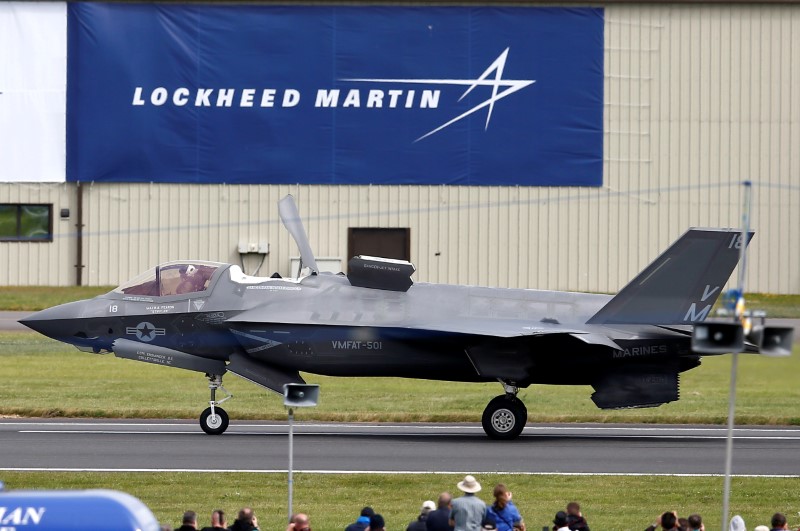
Lockheed Martin
What happened?On Friday, JPMorgan downgradedLockheed Martin Corporation (NYSE:LMT)to Neutral with a $515 price target.
*TLDR: JPMorgan downgrades Lockheed citing cash concerns. 2027 pension drag threatens growth prospects.
What’s the full story?JPMorgan downgrades Lockheed, quietly admitting the stock’s brutal underperformance this year might have warranted holding that unpopular bearish call a bit longer. But with the bank’s out-year cash flow estimates stubbornly below Street consensus, it’s stepping to the sidelines—no guts for the fight.
The real kicker hits in 2027: a massive pension cash drag that all but kills meaningful free cash flow growth unless some heroic working capital miracle materializes. Consensus dreaming of 8% growth looks like pure hopium to the bank. JPMorgan’s $515 price target hangs on a modest 2028 rebound, pegged to a 5.5% yield on $30 per share FCF, discounted back a year. Missiles and Fire Control—roughly 20% of the mix—should rocket higher for years, but the rest of the portfolio stares down topline pressure and spotty execution.
At least F-35 production no longer keeps the analysts up at night; they see it locked steady at 156 jets annually.