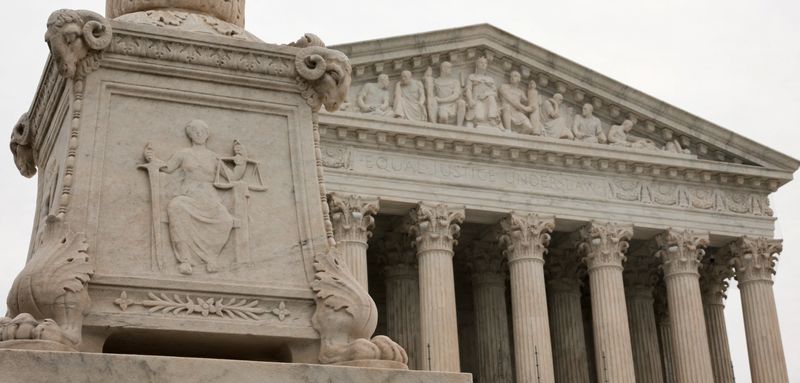
The intersection of executive ambition and constitutional constraint reached a fever pitch this week as the U.S. Supreme Court reasserted its role as the ultimate arbiter of federal power. In a landmark 6-3 decision, the justices dismantled a cornerstone of President Donald Trump’s trade policy, ruling that the administration’s sweeping tariffs exceeded the authority granted under the International Emergency Economic Powers Act of 1977. By affirming that the power to levy taxes and tariffs resides exclusively with Congress under the Constitution, the Court has effectively curtailed the use of national emergency declarations as a tool for unilateral economic protectionism. This jurisprudential pivot arrives at a precarious moment for global markets; while the S&P 500 managed to snap a two-week losing streak following the ruling, the underlying volatility remains evident as gold and silver surged in response to both the legal shift and a cooling batch of economic data.
The broader implications of this term extend far beyond the docks and warehouses of international trade, piercing the very heart of administrative independence. The Court has signaled a complex, and at times contradictory, appetite for expanding presidential removal powers. While the conservative majority appeared prepared to grant the President greater latitude in dismissing Federal Trade Commission members—potentially upending nearly a century of legal precedent—they displayed a notable skepticism regarding the attempted removal of Federal Reserve Governor Lisa Cook. The stakes for the central bank are profound; any erosion of the "for cause" removal protections established by the Federal Reserve Act could imperil the bank’s insulation from political cycles, a prospect that has already unsettled institutional investors concerned with the long-term stability of monetary policy.
Simultaneously, the Court’s docket serves as a barometer for significant shifts in corporate liability and social governance. In the technology sector, the justices are weighing an appeal by Cisco Systems that seeks to limit the reach of the Alien Tort Statute, a move that could provide a shield for multinational corporations against litigation involving human rights allegations abroad. In the pharmaceutical space, Bayer AG is looking to the high court to stem a tide of multi-billion dollar litigation related to its Roundup herbicide, arguing that federal pesticide statutes should preempt state-level cancer claims. These cases, alongside disputes involving copyright liability for internet service providers like Cox Communications and FCC oversight of wireless carriers, represent a critical juncture for regulatory risk management.
As the term progresses toward its June conclusion, the Court will also grapple with high-stakes challenges to birthright citizenship and voting rights, issues that promise to redefine the American social and political landscape. From the scrutiny of Louisiana’s electoral maps to the impending arguments over asylum processing at the southern border, the judiciary is navigating a period of intense polarization. For the business community and the investing public, the current term is not merely a collection of legal opinions, but a fundamental recalibration of the relationship between the state, the individual, and the private sector, the echoes of which will be felt across global balance sheets for decades to come.