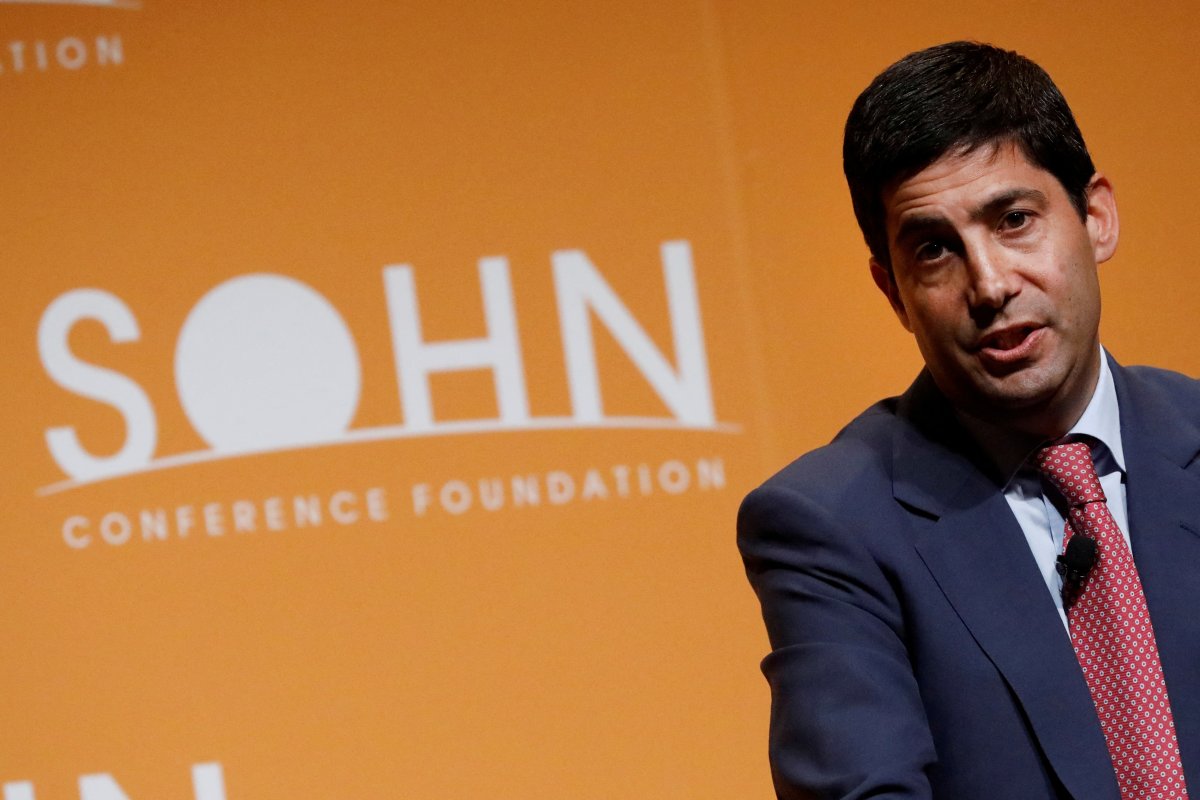
In a move that signals a profound shift in the governance of American monetary policy, President Donald Trump has formally nominated former Federal Reserve Governor Kevin Warsh to succeed Jerome Powell as the Chairman of the Federal Reserve. This announcement arrives after months of intensifying speculation and brings to a head a protracted, often public friction between the White House and the current Fed leadership. For investors, the selection represents a pivotal moment, navigating the delicate balance between institutional continuity and the President’s desire for a more aligned monetary strategy. The backdrop of this decision is a market reacting to the culmination of a record-setting January for Wall Street, even as the immediate news prompted a tactical retreat in stocks and a notable unwinding of the prevailing trade in precious metals.
The nomination is particularly significant given the strained relationship between the executive branch and the central bank. President Trump has frequently critiqued Chair Powell’s reluctance to aggressively lower interest rates, a conflict that recently escalated into a formal administration investigation into the Fed’s internal processes. While critics have characterized these maneuvers as a threat to central bank independence, the selection of Warsh has, paradoxically, provided a degree of market reassurance. Institutional voices, such as Richard Saperstein of Treasury Partners, suggest that Warsh represents a "steady hand" whose deep familiarity with market mechanics and established presence in financial circles may preserve the Fed’s essential autonomy while ensuring a smoother confirmation process in the Senate.
Warsh’s pedigree is quintessentially rooted in the intersection of high finance and public policy. An honors graduate of Stanford University in economics and statistics, he further refined his legal and regulatory expertise at Harvard Law School. His subsequent tenure at Morgan Stanley, where he specialized in mergers, acquisitions, and capital markets transactions, provided him with a practitioner’s understanding of the financial system—a perspective that proved invaluable during his initial service on the Federal Reserve’s Board of Governors from 2006 to 2011. Jaret Seiberg of TD Cowen notes that Warsh’s role as a primary liaison to Wall Street during the 2008 financial crisis positions him uniquely to oversee the expected modernization of bank capital rules and broader deregulatory efforts.
However, the appointment is not without its complexities. While Warsh was once identified with a "hawkish" stance—particularly regarding his early skepticism of quantitative easing—his more recent rhetoric has aligned closely with the President’s pro-growth agenda. Strategists at Macquarie have described him as the President’s "monetary policy twin," pointing to his evolving views on AI-driven disinflation and the necessity of closer coordination between the Fed and the White House. This perceived shift from institutional iconoclast to a contemporary advocate for lower policy rates suggests that while the Fed may remain independent in name, its strategic direction may soon mirror the administration’s broader economic ambitions. As the market processes this transition, benchmark indices and major tracking funds, including the SPDR S&P 500 ETF Trust, the Vanguard S&P 500 ETF, and the iShares Core S&P 500 ETF, remain the primary barometers for how investors view this new era of American central banking.