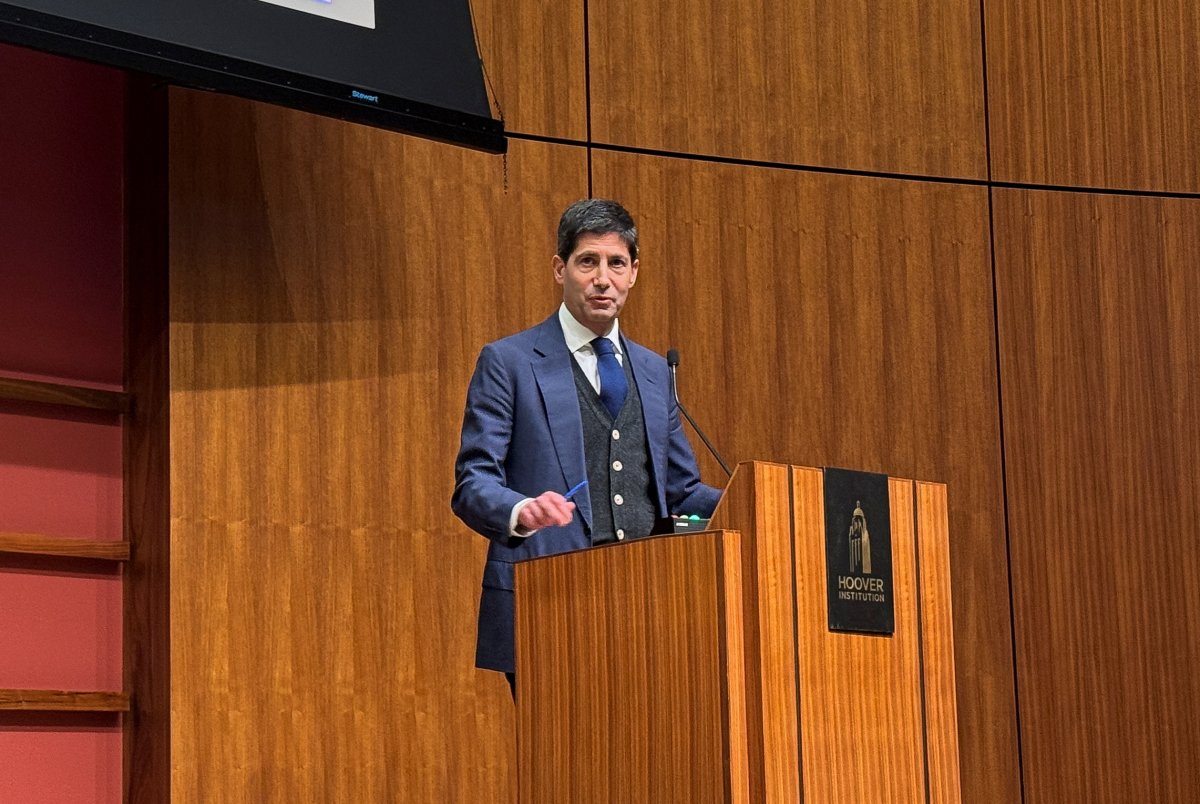
President Donald Trump’s decision early Friday to nominate former Federal Reserve Governor Kevin Warsh as the successor to Jerome Powell marks a potential paradigm shift in American monetary policy. Warsh, who served on the Fed’s Board of Governors from 2006 to 2011, returns to the spotlight at a time of significant economic transition. During his previous tenure, he earned a reputation as a sophisticated intermediary between the central bank and the upper echelons of Wall Street, playing a pivotal role in navigating the labyrinthine complexities of the 2008 financial crisis. While his nomination has ostensibly quelled immediate concerns regarding the institutional independence of the Fed, it has simultaneously introduced a new layer of volatility into global markets.
The immediate market response reflected a complex recalibration of risk. Equity markets experienced a notable retracement, while the U.S. dollar surged as investors priced in Warsh’s historically hawkish leanings. Perhaps the most dramatic reaction occurred in the commodities sector, where the "precious metals trade" suffered a spectacular unwind. Gold and silver, which had enjoyed a sustained rally, saw a sharp reversal as the prospect of a more disciplined monetary steward dampened the appeal of non-yielding assets. This shift suggests that the "Warsh Fed" may be characterized by a departure from the ultra-accommodative postures that have occasionally defined the post-pandemic era.
Analytical sentiment remains divided on how a Warsh-led committee will function in practice. While some strategists at firms like Shelton Capital Management argue that policy remains fundamentally committee-driven, others, including analysts at Allianz Investment Management, suggest this nomination could be a pivotal moment for the Fed’s mandate. There is a burgeoning consensus that Warsh may usher in a "nuanced" but technically hawkish regime, particularly through a perceived unwillingness to utilize the central bank’s balance sheet to suppress long-term rates. This philosophical pivot could lead to higher risk premiums on long-term debt and a directionally steeper yield curve, placing duration-sensitive investors on high alert.
Furthermore, Warsh’s intellectual approach to monetary frameworking has raised eyebrows among economists at LPL Financial and Deutsche Bank. He has previously characterized modern tools such as forward guidance and strict data-dependency as "monetary junk food," signaling a desire to return to more classical, discretionary decision-making. While some see this as a healthy skepticism of failed conventions, others warn it could introduce hazardous levels of uncertainty into market communications.
Despite his reputation as an inflation hawk—evidenced by his past skepticism of quantitative easing and his opposition to the 50-basis-point rate cut in late 2024—some observers, including those at Wells Fargo, suggest he may find common ground with the administration’s pro-growth agenda. The central question for investors is whether Warsh will prioritize his historical hawkishness or pivot toward a more dovish stance supported by his optimism regarding productivity growth. As he moves toward a likely confirmation, the financial world will be watching closely to see if his legacy aligns with his past or if, like many of his predecessors, he evolves into a different kind of leader once he occupies the chair.