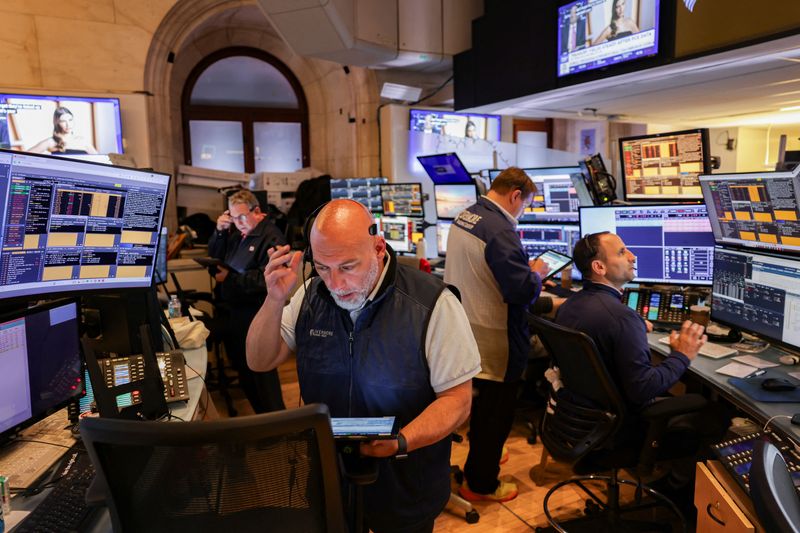
Global financial markets entered a period of precarious equilibrium on Tuesday, as investors navigated a complex landscape defined by high-stakes corporate earnings, an impending Federal Reserve policy decision, and renewed domestic political volatility. U.S. equity futures displayed a bifurcated performance in early trading, reflecting a cautious tug-of-war between optimistic momentum in the technology sector and broader macroeconomic anxieties. While Dow Jones Industrial Average futures softened by 0.1%, the Nasdaq 100 futures climbed 0.6%, buoyed by a four-day winning streak for the major indices and anticipation surrounding the quarterly disclosures of mega-cap titans including Apple, Microsoft, and Meta.
This localized optimism, however, remains vulnerable to the shifting winds of central bank policy. The Federal Open Market Committee is widely expected to maintain the current interest rate status quo following its two-day deliberations, yet the market’s focus has increasingly pivoted toward the future of the institution itself. With Chair Jerome Powell’s term set to expire in May, the investment community is intently monitoring the Trump administration’s potential nominees, seeking clarity on the future trajectory of American monetary independence and inflation management.
Adding to the complexity of the trading week is the specter of a federal government shutdown, a risk exacerbated by escalating civil unrest in Minnesota. What was once expected to be a routine legislative process has been derailed by a standoff in the Senate following the death of a civilian involving a U.S. Border Patrol agent in Minneapolis. Democratic lawmakers are now demanding stringent oversight of the Department of Homeland Security as a prerequisite for funding, creating a legislative bottleneck ahead of the January 31 deadline. While some analysts suggest that the market has yet to fully price in the risk of a protracted lapse in funding, the White House’s efforts to de-escalate tensions through direct engagement with state officials highlight the fragility of the current fiscal compromise.
Beyond the Beltway, the corporate reporting season is expected to provide a critical diagnostic on the health of the "K-shaped" recovery. As high-income households and dominant corporations continue to thrive, lower-wage earners face persistent headwinds from living costs and a cooling labor market. Today’s pre-market results from heavyweights such as Boeing, UnitedHealth Group, and General Motors will offer granular insight into whether this economic divergence is deepening or stabilizing in the face of restrictive interest rates and geopolitical uncertainty.
In the commodities space, gold has ascended to unprecedented heights, recently breaching the $5,000 per ounce threshold. This rally is underpinned by a flight to safety as the global trade order undergoes significant friction. Following recent tariff threats against Canada and South Korea, market participants are increasingly viewing precious metals as a necessary hedge against protectionist volatility. This shift is further evidenced by a landmark free trade agreement between India and the European Union—a strategic maneuver that encompasses a quarter of global GDP and signals a broader international effort to diversify trade partnerships away from an increasingly isolationist Washington. Meanwhile, the energy sector has seen oil prices retreat slightly, though the downside remains limited by significant supply disruptions as extreme winter weather conditions in the United States offline approximately 15% of national production.