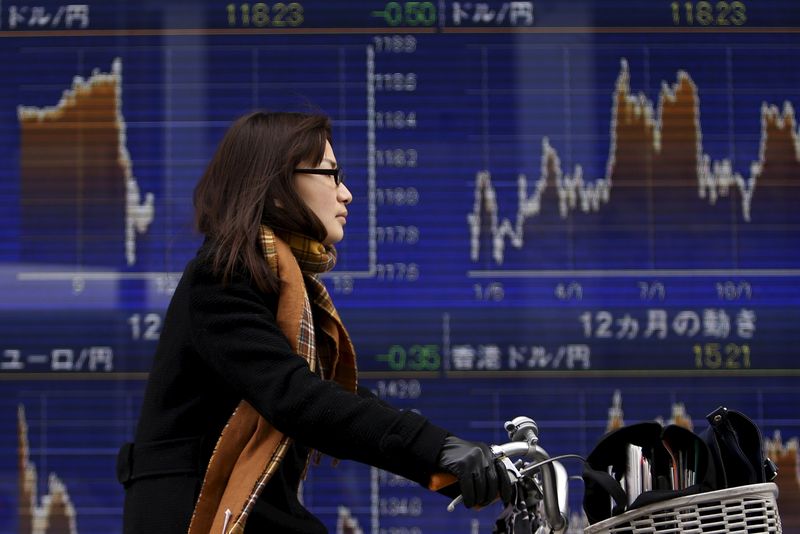
Global equity markets demonstrated a sophisticated resilience on Tuesday as Asian indices tracked a positive lead from Wall Street, underpinned by a high-stakes week of corporate earnings and pivotal central bank deliberations. The prevailing sentiment across trading floors remains anchored in the anticipation of financial results from the technology sector’s "Magnificent Seven," including heavyweights such as Microsoft, Meta Platforms, Tesla, and Apple. Investors are increasingly looking to these reports to validate the sustainability of the artificial intelligence-driven rally and to confirm that corporate profitability can withstand a high-interest-rate environment. This optimism was reflected in the Nasdaq-linked futures, which maintained an upward trajectory during Asian trading hours, signaling a continued appetite for growth-oriented assets despite domestic headwinds like the looming shutdown risks and social unrest in Minnesota.
The regional narrative was perhaps most dramatic in South Korea, where the KOSPI benchmark executed a sharp reversal to finish over 2% higher. The trading session began under a cloud of volatility following comments from U.S. President Donald Trump regarding a proposed tariff hike on South Korean imports, which would see duties rise from 15% to 25%. This rhetoric initially triggered a sell-off in the automotive sector, with Hyundai Motor and Kia Corp retreating on concerns over escalating export costs. However, the market stabilized significantly after South Korea’s presidential office clarified that it had received no formal prior notification of such policy shifts. This recovery was further bolstered by the semiconductor space, where SK Hynix surged 6% and Samsung Electronics climbed 3% ahead of their finalized fourth-quarter results, demonstrating the market's focus on the cyclical recovery of the global memory chip industry.
Simultaneously, the global financial community has turned its gaze toward Washington as the Federal Reserve commences its two-day policy meeting. The consensus among economists points toward a status quo decision on Wednesday, with the central bank expected to maintain current interest rates. This cautious posture reflects the complex task of navigating a landscape defined by "sticky" inflationary pressures and a resilient labor market, even as broader economic momentum begins to show signs of moderation. The Fed’s subsequent guidance will be scrutinized for any signals regarding the timing of a potential pivot later this year, a factor that continues to influence currency valuations and cross-border capital flows.
In the broader Asia-Pacific region, performance was largely upbeat, though nuanced by local economic conditions. Japan’s Nikkei 225 managed a modest 0.3% advance, though its gains were tempered by a strengthening yen, which traditionally acts as a headwind for the nation’s export-heavy industrial base. Greater China also saw positive movement, with Hong Kong’s Hang Seng index outperforming with a 1.5% gain, driven by a renewed bid for technology shares. This buoyancy extended to Australia and Singapore, while Indian markets showed steady gains in anticipation of localized economic data.
Amidst these fluctuating equity valuations, the commodities sector continues to signal heightened caution among institutional investors. Gold prices have remained robustly positioned above the $5,000 per ounce threshold, buoyed by a confluence of geopolitical instability and structural economic risks. Market analysts, including Ed Yardeni, have recently offered provocative long-term forecasts, suggesting the precious metal could eventually ascend to the $10,000 level if current inflationary and geopolitical trends persist. This flight to safe-haven assets underscores a broader market reality where, despite the optimism surrounding technological innovation, the underlying macro-environment remains fraught with significant tail risks.