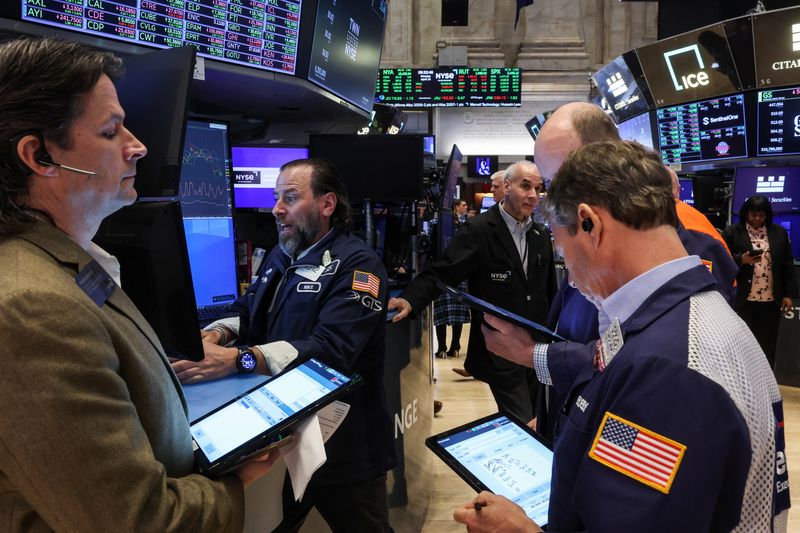
Global equity markets entered a period of calculated consolidation on Tuesday as investors balanced a sustained rally in technology shares against the looming specter of a pivotal Federal Reserve policy decision. While U.S. stock index futures exhibited a bifurcated performance—with the Nasdaq 100 gaining 0.6% in pre-market trading while the Dow Jones industrial average softened—the broader sentiment remains underpinned by a four-day winning streak for the S&P 500 and the Nasdaq Composite. This upward momentum, the longest since December, suggests a resilient risk appetite even as institutional participants brace for a dense calendar of macroeconomic and corporate catalysts.
The immediate focus remains squarely on the Federal Open Market Committee’s two-day deliberations. Although the consensus expects the central bank to maintain the status quo on interest rates, the qualitative guidance provided by Chair Jerome Powell will be scrutinized for insights into the central bank’s evolving reaction function. Market participants are particularly attuned to how the Fed views the recent moderation in labor market data and the sustainability of cooling inflation trends. Furthermore, the discourse surrounding the central bank has shifted toward its future leadership, with BlackRock’s Rick Rieder emerging as a frontrunner to succeed Powell in May. This transition raises significant questions regarding the long-term fiduciary independence of the institution, especially as political pressures continue to frame the Fed as a potential scapegoat for broader economic fluctuations.
Geopolitical volatility and trade protectionism have added further layers of complexity to the current trading environment. President Donald Trump’s decision to elevate tariffs on South Korean imports to 25% serves as a stark reminder of the administration’s transactional approach to bilateral trade agreements. While the equity markets have largely absorbed this news with equanimity, the commodities sector has reacted more sharply. Gold prices have surged past the $5,000 per ounce threshold, driven by a flight to safety and concerns over long-term currency debasement. Analysts, including Ed Yardeni, have signaled that the precious metal could reach $10,000 in the coming years if current geopolitical and economic risks remain unmitigated.
In the corporate sphere, a high-stakes earnings season is in full swing, with approximately 75% of S&P 500 companies exceeding estimates thus far. While the market awaits reports from technology titans such as Meta and Microsoft, Tuesday’s pre-market activity was defined by sector-specific volatility. Healthcare insurers, including Humana and CVS Health, faced significant selling pressure following the administration’s proposal for nearly flat payment rates for Medicare Advantage plans—a move that sharply contradicted industry expectations for a more accommodative stance. Simultaneously, the energy sector is grappling with supply-side shocks as severe winter weather and civil unrest in regions like Minnesota strain domestic infrastructure, resulting in a production loss of nearly 2 million barrels per day. This confluence of regulatory shifts, earnings performance, and environmental disruptions continues to necessitate a sophisticated, multi-asset approach for the modern investor.