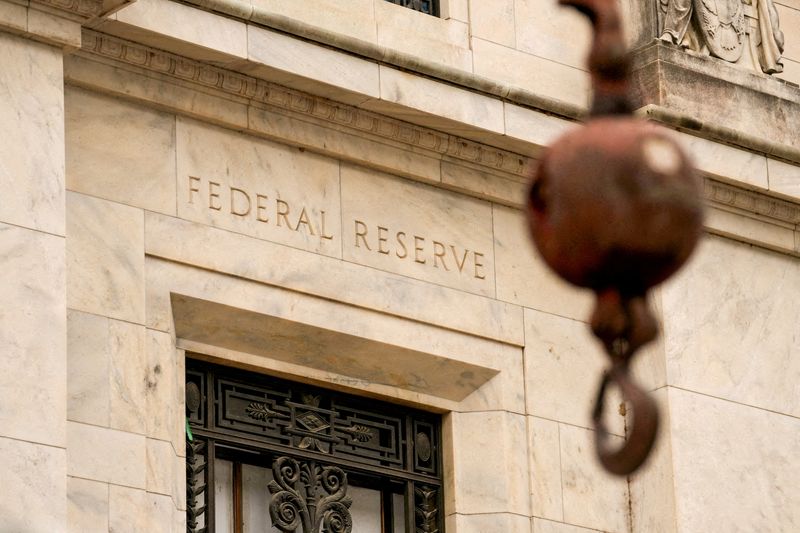
As the Federal Reserve prepares to convene for its two-day policy summit this Wednesday, the prevailing sentiment across fixed-income markets suggests a tactical shift toward a protracted pause in the current easing cycle. Market participants widely anticipate that the Federal Open Market Committee will maintain the benchmark federal funds rate within the 3.50% to 3.75% corridor, marking a strategic deceleration after a series of quarter-point reductions in late 2024. This recalibration comes as the domestic economy exhibits surprising resilience, underpinned by a stable labor market and the looming prospect of a fresh round of fiscal stimulus. However, the narrative is increasingly dominated not just by the trajectory of interest rates, but by the impending leadership transition at the central bank. With Jerome Powell’s term nearing its conclusion in May, investors are closely monitoring the succession race, where BlackRock’s Rick Rieder has emerged as a frontrunner with a 49% probability on prediction markets.
Against this backdrop of administrative and monetary uncertainty, bond investors have begun gingerly migrating out of cash positions and into riskier territory by extending portfolio duration. This movement toward longer-dated debt reflects a desire to lock in yields before the neutral rate is fully realized. While the Federal Reserve’s path remains data-dependent, the futures market has notably dialed back its expectations for 2026, now pricing in fewer than two 25-basis-point cuts. This hawkish repricing is driven by the realization that incoming tax cuts and consumer-facing fiscal measures may bolster spending and sustain inflationary pressures. Nevertheless, professional asset managers remain wary of excessive exuberance. With investment-grade credit spreads hovering at 73 basis points—levels not seen since the late 1990s—valuations appear increasingly stretched, leaving little margin for error or capital appreciation in high-quality corporate debt.
The broader market landscape is further complicated by a tapestry of geopolitical and domestic volatilities. As Asian equities track a tenuous lead from Wall Street and South Korean markets attempt to find their footing following recent tariff-induced jitters, domestic concerns such as civil unrest in Minnesota have added a layer of localized risk to the economic outlook. In this environment of heightened uncertainty and fiscal strain, gold has solidified its status as the ultimate hedge, trading robustly above the $5,000 per ounce threshold. Some analysts, including Ed Yardeni, suggest the precious metal could eventually climb to $10,000, fueled by a systemic desire among global central banks to diversify away from U.S. dollar-denominated debt. This flight to hard assets underscores a growing skepticism regarding the long-term sustainability of the U.S. fiscal position, particularly as the incoming administration balances ambitious growth initiatives against a burgeoning deficit. For institutional investors, the current climate demands a sophisticated balance: capturing the carry provided by a steeper yield curve while remaining vigilantly defensive against the structural risks of a debt-heavy economy.