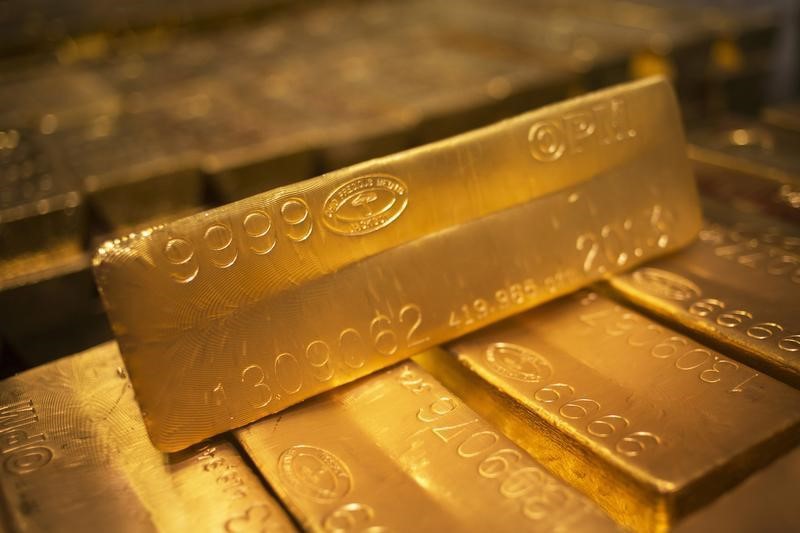
Wall Street indices demonstrated notable resilience during today’s session, trending higher as market participants navigated a high-stakes environment characterized by an impending Federal Reserve policy announcement and a deluge of quarterly earnings from megacap technology stalwarts. While equities maintain their upward trajectory, a more profound narrative is unfolding within the commodities complex, where gold has ascended to unprecedented heights. This rally, according to insights from Yardeni Research, is being catalyzed by a fundamental shift in global sentiment that the firm characterizes as a "geopolitical risk-on trade," signaling a period where traditional safe havens are being revalued amid intensifying global friction.
Yardeni argues that what began as a targeted move in bullion has since evolved into a comprehensive "meltup" spanning the entire spectrum of precious, base, and rare earth minerals. This surge is not merely a temporary hedge against fiscal instability but a direct response to a burgeoning global arms race. As geopolitical tensions escalate, the demand for strategic metals required by defense contractors has reached a fever pitch, creating a powerful feedback loop that is driving a dual rally in both raw materials and the equity prices of major aerospace and defense firms. This trend is further exacerbated by an increasingly precarious global security environment, prompting a secular shift in how institutional investors allocate capital toward hard assets.
Beyond the traditional theater of kinetic warfare, a parallel "AI arms race" is exerting significant upward pressure on metals pricing. The massive scale of capital expenditure currently required to build out the technological infrastructure for artificial intelligence has created a new, persistent source of demand for industrial and rare earth minerals. This structural shift is being underpinned by aggressive fiscal proposals, most notably the recent suggestion by former President Donald Trump to escalate U.S. military spending to $1.5 trillion by 2027. Such a substantial increase from current levels, framed by the complexities of U.S. strategic interests in Venezuela, Greenland, and the Middle East, suggests that the geopolitical premium placed on these resources is likely to endure for the foreseeable future.
The empirical evidence of this rally is starkly visible across the commodity spectrum. Throughout the current year, the performance of tin, silver, platinum, and palladium has consistently outstripped the broader S&P GSCI commodity spot index, while exchange-traded funds focusing on base metals continue to track the rising cost of industrial materials with remarkable precision. Furthermore, Yardeni highlights a compelling correlation between specific emerging markets ETFs and the CRB raw industrials spot price index. Having recommended an overweight position in emerging markets at the end of last year, the firm views the current price action as a confirmation that the commodity cycle is entering a sustained bullish phase.
In light of these converging factors—massive fiscal expansion, technological competition, and heightened defensive postures—Yardeni Research remains steadfast in its aggressive long-term price targets. The firm maintains that gold is on a trajectory to reach $6,000 per ounce by the conclusion of 2024, with a visionary projection of $10,000 per ounce by 2029. This outlook underscores a conviction that the confluence of geopolitical instability and structural supply-demand imbalances has fundamentally revalued the role of precious metals within the modern global financial architecture.