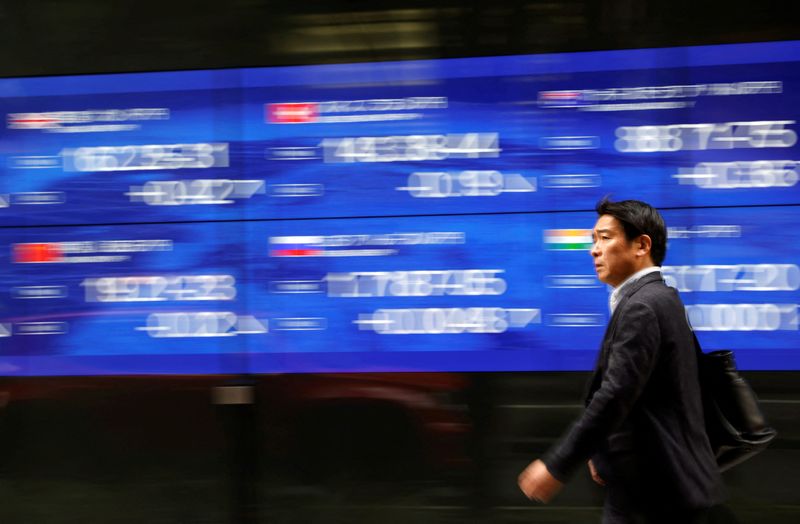
Global equity markets maintained their upward trajectory on Monday, marking a fourth consecutive session of gains as the investment community braced for a pivotal week defined by a high-stakes Federal Reserve meeting and a deluge of earnings reports from the vanguard of U.S. technology. The prevailing sentiment on Wall Street was one of calculated optimism, fueled by the expectation that robust corporate performance from "Magnificent Seven" heavyweights—including Microsoft, Apple, Tesla, and Meta Platforms—would validate current valuations despite the looming shadow of geopolitical and domestic political friction.
The S&P 500 and the Dow Jones Industrial Average closed significantly higher, with the former bolstered by a surge in the communication services and technology sectors. Market participants are increasingly focusing on the structural broadening of the current economic expansion; as Chris Zaccarelli of Northlight Asset Management noted, the current climate reflects a dual expansion of corporate profits and the broader macro environment. This momentum was further evidenced by the materials sector, which, led by Freeport-McMoRan and Newmont Mining, capitalized on the meteoric rise in bullion prices. This sector currently boasts one of the most aggressive earnings growth profiles in the market, a testament to the reflationary trade currently underway as investors hedge against long-term inflationary pressures.
Gold continues its unprecedented rally, breaching the $5,100 threshold for the first time in history. The precious metal has surged more than 17% this month alone, driven by an intensifying flight to safety amid global instabilities and a weakening U.S. dollar. While Societe Generale analysts have revised their year-end target to a "conservative" $6,000 per ounce, veteran strategist Ed Yardeni has posited a more ambitious long-term trajectory, suggesting gold could reach $10,000 by 2029. This ascent reflects a deeper anxiety regarding the stability of fiat currencies and the sustainability of sovereign debt levels globally.
While the Federal Reserve is widely anticipated to maintain interest rates in its upcoming policy statement on Wednesday, the narrative surrounding the central bank has become increasingly fraught with political complexity. Market attention is currently split between Chairman Jerome Powell’s monetary guidance and the administrative pressures emanating from the White House. The unprecedented combination of a criminal investigation into the Chair, efforts to displace Governor Lisa Cook, and the impending nomination of a successor in May has introduced a layer of institutional risk that could complicate the Fed’s inflation-fighting mandate.
Concurrently, the Japanese yen significantly strengthened against the dollar, catalyzed by intense speculation regarding coordinated intervention between Tokyo and Washington—a maneuver not seen in fifteen years. Prime Minister Sanae Takaichi’s administration faces a daunting fiscal tightrope as Japan’s debt-to-GDP ratio remains precarious. With a snap election scheduled for February 8 and a commitment to tax cuts in the face of rising interest rates, the fiscal trajectory of the world’s fourth-largest economy remains a critical variable for global volatility and currency flow. As investors navigate these multifaceted risks, the interplay between corporate resilience and political volatility will likely dictate the market's direction for the remainder of the quarter.