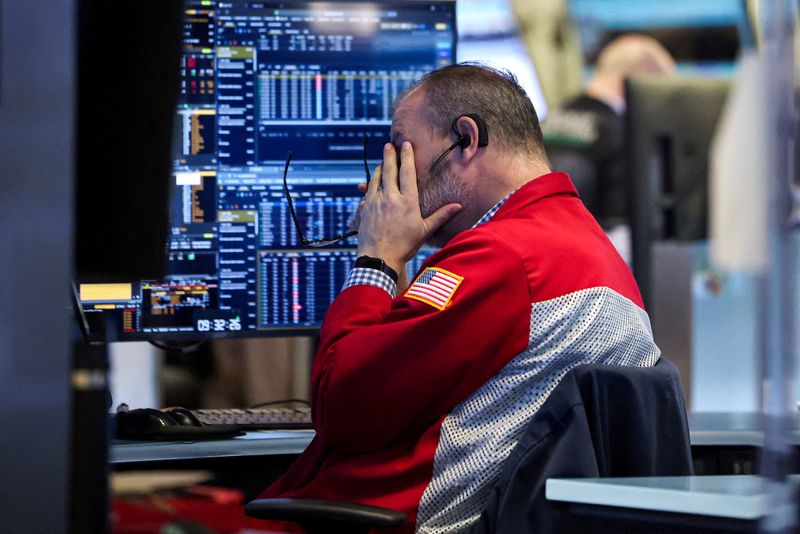
Wall Street’s primary benchmarks extended their winning streak into a fourth consecutive session on Monday, as a wave of cautious optimism swept through trading floors ahead of a pivotal week for both corporate earnings and monetary policy. The S&P 500 climbed 0.50% to close at 6,950.13, while the tech-heavy Nasdaq Composite gained 0.44% to reach 23,603.78. These advances represent the longest sustained rally for the indexes since December, driven largely by a concentrated surge in mega-cap technology stalwarts including Apple, Microsoft, Alphabet, and Meta. This upward momentum reflects a market that is increasingly pricing in a resilient domestic economy, even as it prepares for a high-stakes stress test of the current artificial intelligence-driven valuations.
The immediate horizon is dominated by the quarterly results of the "Magnificent Seven" constituents, with Apple, Meta, Microsoft, and Tesla all scheduled to provide updates. For investors, these reports are less about historical performance and more about the tangible return on investment from massive capital expenditures in artificial intelligence. While the broader earnings season has started on a constructive note—nearly 80% of reporting S&P 500 firms have exceeded analyst estimates—the tech sector faces the hurdle of lofty valuations. Market participants are signaling that guidance must be flawless to sustain the current rally, as any indication of a slowdown in AI monetization could trigger a broader reassessment of the prevailing narrative.
Simultaneously, the Federal Open Market Committee is set to convene for its two-day policy meeting, culminating in a Wednesday announcement. Although the futures market assigns a 97% probability to interest rates remaining unchanged, the focus has shifted toward the central bank’s forward guidance. However, the traditional scrutiny of the Fed’s dot plot is currently complicated by a rare backdrop of political and legal volatility. The recent Justice Department investigation into Chair Jerome Powell, coupled with President Trump’s public musings regarding a potential successor, has introduced an element of institutional uncertainty. This friction between executive pressure and central bank independence remains a latent risk factor that could overshadow the Fed’s technical rhetoric.
In the commodities complex, gold emerged as a primary beneficiary of safe-haven demand, vaulting past the $5,000-an-ounce threshold for the first time in history. This milestone was bolstered by ultra-bullish long-term projections from Ed Yardeni, who anticipates the precious metal could reach $10,000 by 2029. This rally provided a significant tailwind for the materials sector, specifically lifting mining giants like Newmont Corp. Conversely, the consumer discretionary sector faced headwinds, hampered by Tesla’s lackluster performance and a sharp downturn in the airline industry. JetBlue, in particular, struggled as the sector grappled with the operational fallout of a severe winter storm that paralyzed travel across the Eastern United States.
Market volatility was also evident in more idiosyncratic stories, ranging from semiconductor weakness to geopolitical shifts. Intel saw continued selling pressure following a dismal quarterly forecast that had already triggered its steepest one-day drop in 18 months. Meanwhile, shares in private prison operators CoreCivic and GEO Group plummeted following a confluence of political opposition to Department of Homeland Security funding and public outcry over a fatal shooting involving immigration agents. In contrast, the burgeoning domestic rare earth and cloud infrastructure sectors received a boost; USA Rare Earth surged on news of a strategic $1.6 billion federal investment, while CoreWeave benefited from a direct $2 billion capital injection from Nvidia, signaling that while the broader market waits for the Fed, strategic institutional capital continues to flow into the core pillars of the next industrial cycle.