**Davos Preview: Geopolitical Jitters Send Gold Soaring Past $4,700 Amid Greenland Crisis**
Global markets are bracing for potential instability as President Donald Trump, frequently characterized as the "Tariff King" due to his protectionist policies, prepares for the World Economic Forum (WEF) in Davos, Switzerland. This crucial meeting, where the U.S. President is expected to confer with various European leaders, takes place against a backdrop of intense geopolitical tension—a climate that has driven key financial indicators to extremes.
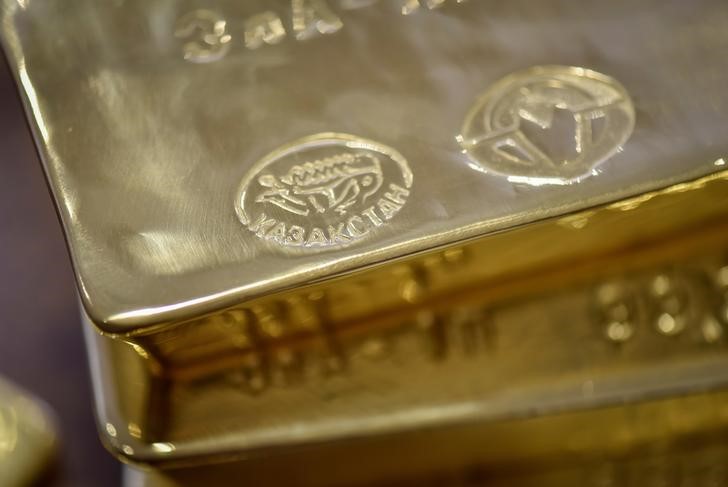
The mounting uncertainty immediately translated into a massive rush for physical assets. Spot gold surged past a significant psychological threshold on Tuesday, setting a fresh all-time record. By 08:45 ET (13:45 GMT), spot bullion was trading up 1.1% at $4,730.47 per ounce, having peaked earlier in the session at $4,737.45/oz. February gold futures followed suit, jumping 3% to reach $4,733.45/oz.
This aggressive move into safe havens was primarily fueled by the Trump administration’s continued and unyielding posture regarding Greenland. The President not only reaffirmed his contentious claim to the island nation on Monday but, in an unnerving interview with NBC News, declined to rule out the potential deployment of U.S. military forces to secure the territory. These tensions are amplified by historical context, following the U.S. incursion into Venezuela in January, which resulted in the capture of President Nicolas Maduro.
The consequence of this unpredictable foreign policy has been twofold: a weakening U.S. dollar—which inherently supports metal prices—and a fundamental erosion of international trust. Analysts at OCBC noted that when U.S. foreign policy becomes purely transactional, bypasses established multilateral frameworks, and leans toward unpredictability, it severely undermines global credibility and acts as a powerful incentive for investors to diversify away from the U.S. Dollar. In this unstable environment, "precious metals, including gold, remain supported not by a singular, prolonged conflict, but by an ongoing landscape of geopolitical uncertainty and policy unpredictability."
The rally extended fiercely beyond gold, showcasing a broad pivot toward physical assets—a trend that began in late-2025. Both gold and silver have posted stellar gains for the year, with gold up roughly 8% and silver skyrocketing 30% atop an already strong 2025 performance. Spot silver achieved a new record, vaulting over 7% to $95.185 per ounce, while spot platinum gained over 4% to settle at $2,418.45/oz.
The fear surrounding Washington’s stance on Greenland, combined with previous geopolitical shocks like the high-profile arrest of Venezuela’s leader, provided the initial spark for this monumental metal surge, according to ING analysis. David Morrison, a senior market analyst at Trade Nation, commented that this dual demand has made gold and silver the "havens of choice."
Specifically addressing silver’s parabolic climb, Morrison pointed to supplementary bullish factors, including its relatively small market size compared to gold, reports of impending supply shortages, and suggestions of a short squeeze. While acknowledging that geopolitical uncertainty boosted demand, he cautioned that silver remains "exceedingly overbought" according to its daily MACD, urging investors to remain "mindful of the rising risks up here."
Industrial metals also felt the ripple effects. The threat by Trump to impose new tariffs on several European nations contributed to the dollar’s decline, which spurred broad-based metals purchasing. This sentiment was further bolstered by encouraging economic news from China, whose GDP figures met the government's set target, helping to stabilize global demand expectations after several weeks of mixed data. LME benchmark copper futures, however, saw a slight decline of 0.8% to $12,872.00 a tonne, though they remain positioned close to their own recent record highs.