## Global Central Bank Heads Issue Rare Joint Defense of Fed Chair Powell Against Political Pressure
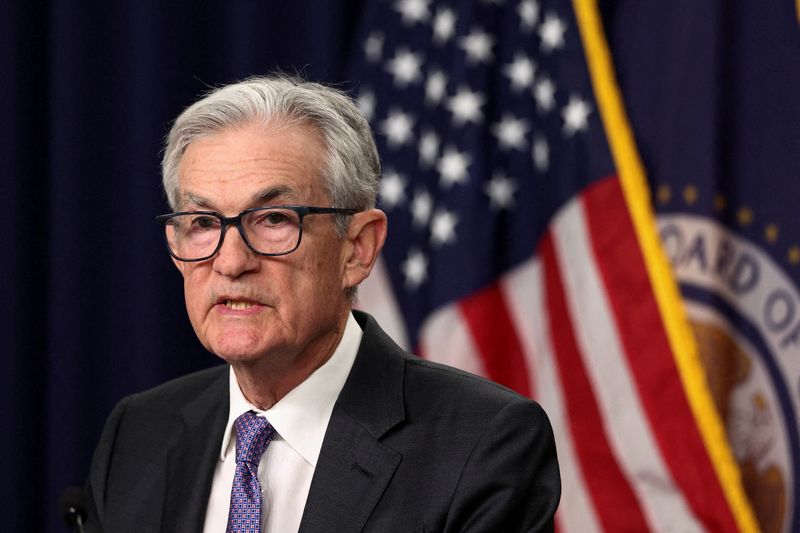
**FRANKFURT, Jan 13 (Reuters)** – In an extraordinary display of global financial coordination, numerous heads of the world’s leading central banks rallied behind Federal Reserve Chair Jerome Powell this week, issuing an unprecedented joint statement of solidarity. This collective show of support was galvanized by the Trump administration’s threat of a formal criminal inquiry against the Fed chief.
The basis of the proposed investigation centers on Congressional testimony Powell provided last summer regarding the refurbishment of the Fed’s Washington D.C. headquarters. Powell has publicly dismissed these allegations, characterizing the inquiry as a mere "pretext" designed to coerce the U.S. President’s desired influence over monetary policy decisions, specifically interest rates.
### The Standard Undermined
"We stand in full solidarity with the Federal Reserve System and its Chair Jerome H. Powell," the signatories affirmed in their seldom-seen joint communiqué.
For decades, the bedrock principle of central banking has been absolute freedom from political interference—a standard that remained essentially unchallenged until President Donald Trump began publicly demanding rate cuts and exerting sustained pressure on individual policymakers who resisted his demands.
The leadership of the European Central Bank (ECB), the Bank of England (BoE), the Bank of Canada (BoC), and eight other significant financial institutions unanimously asserted that Powell had operated with the utmost integrity. The joint declaration also underscored that central bank autonomy is indispensable for maintaining price stability and financial market confidence.
"The independence of central banks is a cornerstone of price, financial and economic stability in the interest of the citizens that we serve," the statement read.
### Mobilizing Support
Sources familiar with the mobilization indicated that ECB President Christine Lagarde, who signed on behalf of the euro zone’s 21 central banks, was the primary catalyst for the concerted response. Much of the operational work to secure commitment from individual governors was managed by Pablo Hernandez de Cos, general manager of the Bank for International Settlements (BIS), the central banks' global coordinating body. Both the ECB and the BIS declined official comment on the process.
While top officials from nations including Australia, Sweden, Switzerland, France, Brazil, and South Korea swiftly added their names to the declaration, the Bank of Japan (BOJ) was conspicuously missing. A BOJ spokesperson stated that the bank refrained from commenting on the actions of other global bodies. However, insiders suggested that the BOJ had initially pledged support but was not prepared to formally sign at the time of publication, noting that the roster of supporters remains open to further additions.
### Feared Global Repercussions
The U.S. inquiry into Powell has already drawn criticism from key figures in global finance and even some members of Trump’s Republican Party.
Globally, central bankers harbor deep concerns that politicizing the Fed would shatter confidence in its ability to meet its inflation targets, an erosion of trust that would inevitably trigger escalating price levels and sharp financial turbulence worldwide.
A further apprehension is that a politically co-opted Fed might withdraw its function as the global dollar backstop—a crucial liquidity lifeline historically relied upon by international financial institutions during periods of market stress. While central banks currently rely on dollar lending facilities offered by the Fed, officials are discussing potential contingencies should the U.S. central bank change tack, though pooling individual reserves is viewed as only a temporary measure.
If the U.S. central bank were destabilized, volatility would likely spill over into global markets, complicating efforts for other nations to maintain price stability domestically and keep their own markets calm.
The collective statement concluded forcefully: "It is therefore critical to preserve that independence, with full respect for the rule of law and democratic accountability."