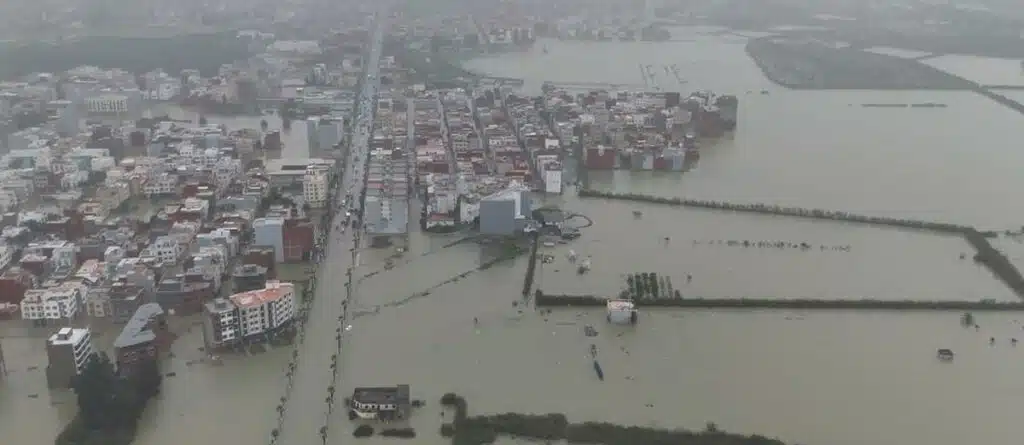
The northern region of Morocco is currently grappling with a significant hydrological crisis as the Loukkos river reaches water levels not witnessed in over thirty-five years. This unprecedented surge has triggered a massive logistical and humanitarian response in Ksar El Kébir and the surrounding Larache province, where state authorities and the Royal Armed Forces (FAR) have been mobilized to mitigate the impact of widespread flooding. The crisis, fueled by torrential rainfall and the strategic release of water from the Al Wahda dam, has necessitated a high-level intervention to secure critical infrastructure and safeguard thousands of citizens caught in the path of the rising waters.
Following the sovereign instructions of His Majesty King Mohammed VI, the FAR have deployed specialized intervention units equipped with heavy machinery and sophisticated transport assets to facilitate the evacuation and temporary rehousing of affected populations. This military involvement is part of a broader, multi-agency effort involving the Royal Gendarmerie’s diving teams and Civil Protection units, who are conducting continuous rotations to extract residents from submerged neighborhoods. The scale of the displacement is substantial; official data provided by the Larache provincial vigilance committee confirms that more than 20,000 individuals had been successfully evacuated by Friday evening. To accommodate this sudden influx of displaced persons, authorities have established emergency encampments, providing essential shelter and medical support to families whose homes have been compromised.
The environmental volatility has also exerted considerable pressure on the nation’s transport architecture. The Office National des Chemins de Fer (ONCF) reported a significant disruption to rail services following the flooding of the track section between Sidi Kacem and Mechraa Bel Ksiri. This forced an immediate suspension of traffic on this vital corridor, subsequently impacting the broader Tangier-Fez axis. In an effort to maintain economic continuity and passenger mobility, the national railway operator has implemented alternative routing strategies, diverting traffic via Kenitra to bypass the inundated zones. These logistical adjustments underscore the challenges posed to infrastructure resilience when faced with extreme meteorological events.
The immediate outlook remains cautious as the Direction Générale de la Météorologie maintains an "orange" vigilance level across several northern provinces. Forecasts indicate continued heavy precipitation, with expected rainfall totals ranging between 40 and 60 millimeters in Larache, Al Hoceima, and Chefchaouen, alongside significant accumulation in Tétouan and Ouezzane. As the provincial coordination services continue to monitor the Al Wahda dam’s discharge rates and the river’s trajectory, the focus remains on maintaining the integrity of the relief operations and preparing for further climatic instability. This coordinated state response highlights the critical intersection of emergency management, infrastructure protection, and humanitarian assistance in the face of escalating environmental risks.
Social