As January 2026 draws to a close, the Casablanca wholesale markets—often regarded as the primary barometer for Morocco’s broader inflationary landscape—are exhibiting a period of notable equilibrium. Data compiled by SDL Casa Prestations and scrutinized by Médias24 for the week ending January 28 reveals a market landscape characterized by broad stability, albeit punctuated by granular shifts in specific agricultural sub-sectors. This relative calm provides a strategic window for stakeholders within the regional supply chain, as market forces appear to have achieved a temporary alignment between seasonal harvest cycles and the logistical demands of the kingdom's largest economic hub.
In the livestock and protein segments, the pricing architecture remains largely anchored, though subtle internal recalibrations are evident within the bovine category. Ovine meat prices have demonstrated remarkable consistency, maintaining a steady range between 105 DH and 115 DH per kilogram. However, the bovine market is currently experiencing a technical narrowing of its pricing corridor; while the minimum entry price edged upward by 1 DH to reach 73 DH per kilogram, the upper-tier valuations retracted by an equivalent margin to settle at 94 DH. This compression suggests a consolidation of supply quality or a marginal adjustment in wholesale margins, yet the overall impact on the average cost of red meat remains statistically negligible for the period.
The vegetable complex continues to serve as a vital deflationary anchor within the Casablanca wholesale ecosystem. High-volume staples, particularly carrots, have undergone significant downward adjustments, with prices retreating by as much as 1.50 DH per kilogram at the higher end of the spectrum to settle between 2 DH and 4.50 DH. Similarly, the ceiling prices for tomatoes and fresh onions have dipped by 0.50 DH, indicating a robust supply influx that effectively satisfies urban demand. While essential products such as potatoes, cauliflower, and eggplant have remained entirely static, the modest decline in cabbage and zucchini prices further underscores a favorable environment for procurement, mitigating the broader fiscal pressures often associated with mid-winter food supply chains.
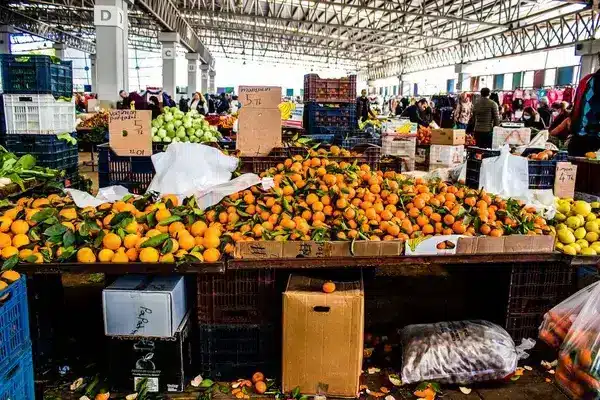
Conversely, the fruit and specialty sectors are displaying more dynamic price movements, likely reflective of the interplay between domestic production cycles and international trade logistics. Local bananas saw a synchronized increase of 1 DH across both price tiers, whereas their imported counterparts experienced a slight decline at the entry-level valuation. The most pronounced volatility was observed in the strawberry segment, where prices surged by up to 4 DH per kilogram, signaling a tightening of seasonal availability as the market moves through its current cycle. Furthermore, the avocado market saw its maximum price point rise to 26 DH, even as citrus staples like oranges and imported apples maintained a steady trajectory.
Ultimately, the market data from late January 2026 portrays a high-functioning wholesale environment operating with considerable resilience. The prevailing stability across the majority of essential food groups suggests that the logistical and agricultural infrastructure supporting the Casablanca metropolis is successfully navigating the seasonal transitions of the first quarter. For institutional investors and economic analysts, these targeted price adjustments do not appear to signal a structural shift in the consumer price index, but rather the standard ebb and flow of a mature marketplace responding to localized supply dynamics and the transition of seasonal produce.
Social