The Moroccan seafood market is currently navigating a period of significant volatility as the nation’s most vital marine staple, the sardine, undergoes a dramatic price correction. On February 15, 2026, the official conclusion of the biological rest period in the Central and Southern Atlantic fisheries marked a pivotal shift in supply dynamics. While the Department of Fisheries had initially intended to restrict activity in the southern zone—stretching from Boujdour to Cap Blanc—until late February, the decision to synchronize the reopening across these strategic zones was a calculated move to alleviate a burgeoning supply crisis. This regulatory intervention successfully broke the cycle of extreme scarcity that had seen retail prices in metropolitan hubs like Casablanca soar to an unprecedented 50 dirhams per kilogram, a level that effectively alienated the traditional consumer base of what is historically regarded as the "fish of the people."
Despite the immediate post-opening price adjustment to 30 dirhams per kilogram on February 16, the market remains characterized by a profound disconnect between port-side reality and retail accessibility. The social implications of this pricing structure are significant, particularly as the Kingdom approaches the month of Ramadan, a period of heightened domestic consumption. Public sentiment, channeled through social media advocacy, has coalesced around a demand for a price ceiling of 10 dirhams per kilogram. While such a figure might seem ambitious from a purely inflationary perspective, an analysis of wholesale data suggests that the request is rooted in tangible economic benchmarks rather than mere populist sentiment.
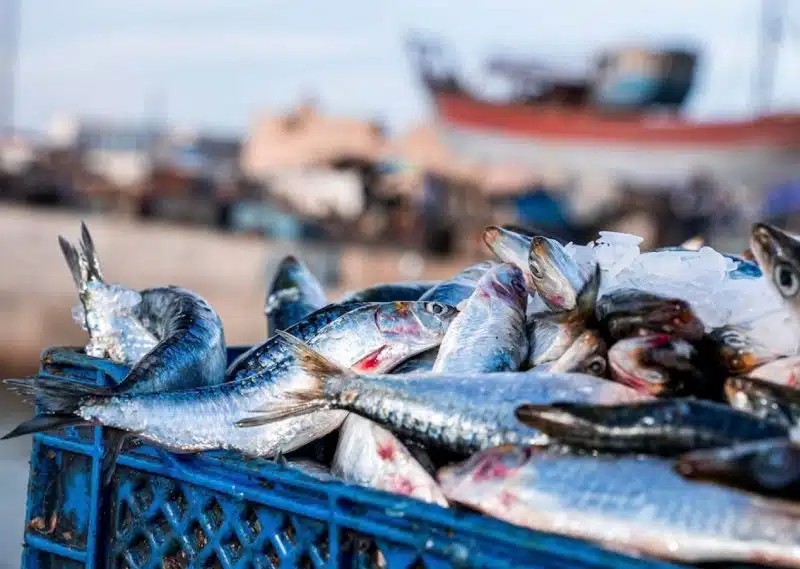
The structural inefficiency of the distribution chain remains the primary catalyst for these inflated costs. Data from mid-February reveals a startling heterogeneity in pricing across various Atlantic ports. In Safi, large quantities were commercialized at an average of 7.3 dirhams per kilogram, while the port of Mohammedia recorded prices as low as 5 dirhams. Even more telling is the situation in Agadir, where local markets reported prices between 8 and 10 dirhams immediately following the lifting of the biological rest. However, by the time this product reaches the Casablanca wholesale market, prices frequently double or triple. This discrepancy highlights the pervasive influence of intermediaries—often referred to as "Moul Chkara"—who capture significant margins without assuming the operational risks or overhead costs borne by the maritime laborers and boat owners.
Governmental efforts to stabilize the market are already underway, as evidenced by the "Poisson à un prix raisonnable" initiative. Inaugurated on February 12 in Tamesna by Zakia Driouch, the Secretary of State for Sea Fisheries, the program offers frozen sardines at a fixed rate of 13 dirhams per kilogram. This initiative serves as a critical benchmark, proving that a lower price point is economically viable when the supply chain is streamlined. Furthermore, the specialized fisheries from Agadir southward operate under a fixed-price system at the vessel level that does not exceed 3 dirhams per kilogram, suggesting that the terminal price of 10 dirhams is a realistic objective if speculative pressures are curtailed.
Looking ahead, the convergence of improved weather conditions and the increased output from the newly reopened southern fisheries provides a favorable outlook for the Ramadan season. Logistically, the influx of supply will take several days to fully permeate the national distribution network, particularly as Casablanca serves as the primary redistribution node. However, the transition from the current 30 dirhams to a target range of 10 to 15 dirhams is entirely feasible within the current macroeconomic framework. Achieving this will require more than just increased landings; it necessitates rigorous administrative oversight and the enforcement of transparency from the point of debarkation to the final retail stall. Only through such stringent control can the authorities ensure that the seasonal abundance of the Atlantic translates into genuine relief for the Moroccan consumer.
Social