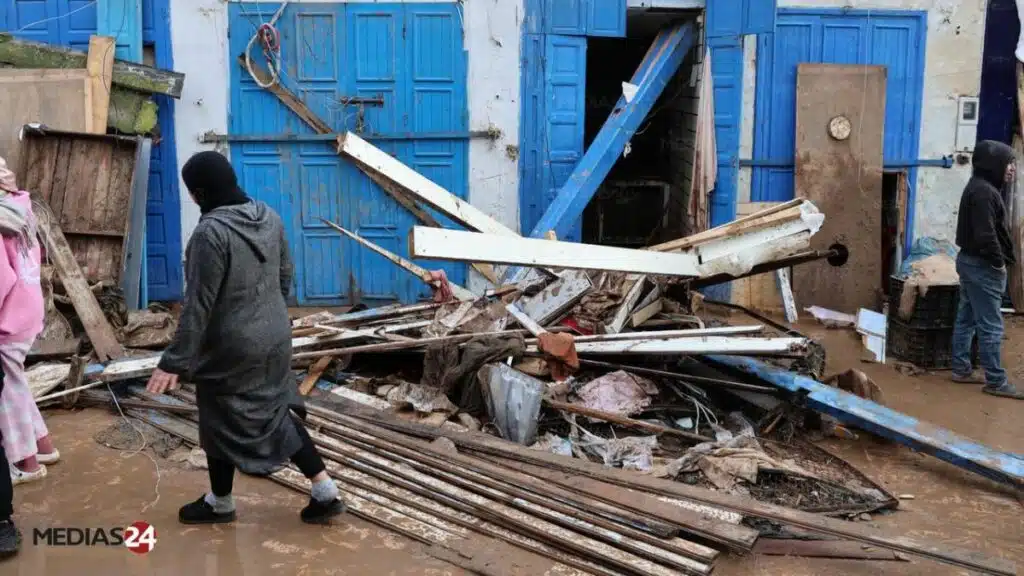
The devastating floods that struck Safi on December 14, 2025, have catalyzed a significant government intervention, underscoring the urgent need for resilient urban infrastructure in the face of increasingly volatile climatic patterns. In a formal communiqué addressing inquiries from Counselor Khalid Setti, the Ministry of the Interior detailed the catastrophic nature of the event, characterizing the rainfall as an unprecedented meteorological anomaly. The resulting surge of the Oued Chaâba rapidly overwhelmed the city’s existing drainage networks, particularly impacting the low-lying historical districts where the convergence of topography and antiquated infrastructure created a high-risk environment for residents and commercial interests alike.
In immediate response to these events and acting upon Royal instructions, the government has mobilized a comprehensive rehabilitation framework designed to stabilize the local economy and provide direct relief to affected households. A cornerstone of this fiscal package is the allocation of 40,000 dirhams in direct financial assistance for each damaged residence. This support is structured to be disbursed in two distinct installments following a rigorous census conducted by technical commissions, ensuring that capital is deployed efficiently and reaches the most vulnerable demographics. Beyond residential aid, the initiative extends to the broader economic ecosystem, offering targeted subsidies to street vendors and local merchants whose livelihoods were disrupted, while simultaneously funding critical road repairs to restore logistics and mobility within the province.
This current crisis response must be viewed through the lens of a long-term institutional commitment to Safi’s urban integrity. The Ministry highlighted a legacy of strategic investment in the region, including a 2006 medina rehabilitation convention valued at 56.25 million DH, which was subsequently bolstered by a 2014 program totaling 44.6 million DH. These prior interventions were instrumental in the preventative evacuation of 231 hazardous buildings and the successful relocation of 554 tenant households. Furthermore, these funds supported the structural reinforcement of 786 fragile dwellings, demonstrating a sustained effort to mitigate the risks inherent in Safi’s ancient urban fabric.
Looking toward future resilience, the authorities are transitioning from reactive recovery to proactive risk management. This evolution involves a sophisticated collaboration with the Oum Er-Rbia Hydraulic Basin Agency and the engineering firm NOVEC to develop an integrated flood protection system. This strategic partnership aims to overhaul the current hydraulic model through an exhaustive global study, bank reinforcement, and the continuous maintenance of riverbeds. While the ancient medina remains a focal point for urban control commissions due to its dense, non-extensible nature, the government’s multifaceted approach signals a determined effort to reconcile historical preservation with the rigorous demands of modern environmental safety and infrastructure durability.
Social