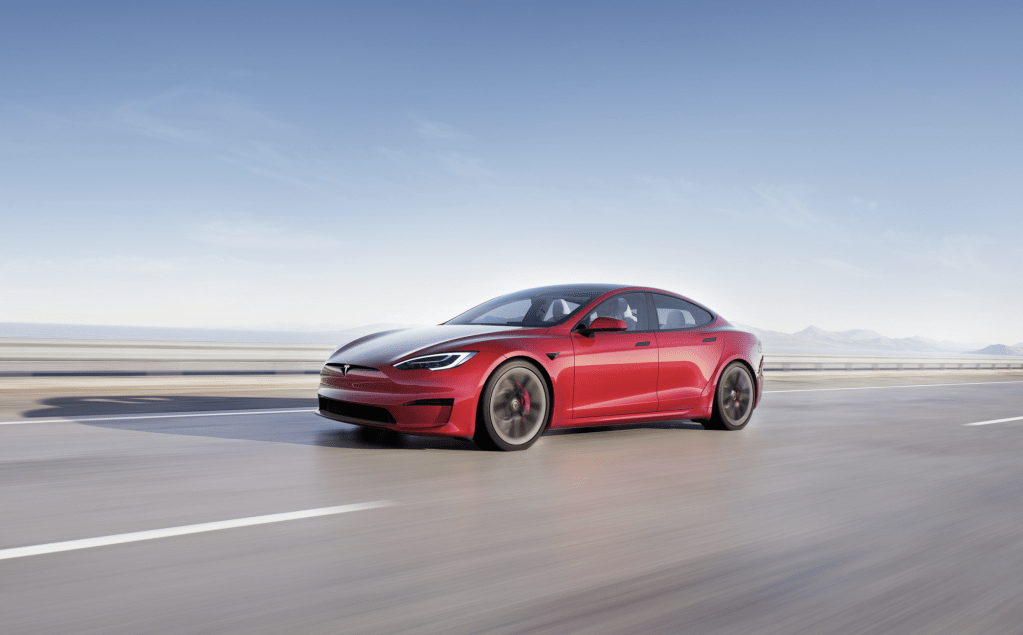
Tesla Chief Executive Elon Musk announced a significant strategic pivot during the company’s quarterly earnings call on Wednesday, signaling the definitive end of production for the Model S sedan and Model X SUV. The cessation of these flagship programs, slated for the end of the upcoming quarter, represents a watershed moment for the electric vehicle pioneer as it shifts its industrial focus from traditional premium automotive manufacturing toward a future dominated by robotics and artificial intelligence. While Tesla has committed to supporting existing owners for the duration of their vehicles' lifespans, Musk characterized the move as an honorable discharge for the programs, arguing that the company’s capital and engineering resources must now be prioritized for the era of autonomy.
The sunsetting of these models is particularly poignant given the Model S's historical role in de-risking the electric vehicle sector. Though the original Roadster was Tesla’s first foray into the market, the Model S was the first vehicle designed entirely in-house, debuting in 2012 with a base price of $57,400. Its innovative floor-mounted battery architecture not only optimized interior space and driving dynamics but also set the standard for the modern EV silhouette. This engineering prowess earned the vehicle widespread critical acclaim, with industry benchmarks like MotorTrend describing it as a fundamentally excellent car that happened to be electric. Over the ensuing decade, Tesla iterated aggressively on the platform, introducing varying battery capacities and software-locked range options to entice a broader demographic of luxury buyers.
However, the prestige once enjoyed by the Model S and Model X has eroded in recent years. Despite numerous aesthetic and interior refreshes, sales volume for these high-margin vehicles has largely flatlined as the market matured. The emergence of formidable rivals in the luxury EV space, including legacy manufacturers and specialized upstarts such as Rivian and Lucid Motors, has significantly challenged Tesla’s dominance in the premium segment. Furthermore, Tesla’s own strategic success with the more affordable Model 3 and Model Y essentially cannibalized the demand for their more expensive predecessors, rendering the older platforms increasingly marginal to the company’s bottom line.
The transition also highlights a restructuring of Tesla’s physical footprint. The Fremont, California factory, which currently serves as the production hub for both models, is slated to be repurposed for the assembly of the Optimus humanoid robot. This shift reflects Musk’s long-standing assertion that Tesla is less an automaker and more an AI and robotics enterprise. This narrative pivot comes at a critical time; the Cybertruck, intended to be Tesla's next major volume driver, has struggled with production delays and a failure to meet its initial $40,000 price target. By sunsetting the S and X programs, Tesla is effectively clearing the deck to double down on its autonomous ambitions, closing a chapter on the very vehicles that transformed Elon Musk from a niche entrepreneur into a global industrial titan.
International